Margaret Bourke-White, one of the original four staff photographers hired at LIFE magazine when it began publishing in 1936, had a talent for making beautiful pictures from industrial processes. See her photo essay on a Canadian paper mill for one such example.
For LIFE’s July 17, 1939 issue Bourke-White documented another industry: the telephone business. This was back in the day when the ability to talk to anyone anywhere by dialing some numbers wasn’t yet taken for granted.
“Even in this age, when mechanical marvels become a dime a dozen, the telephone remains a marvelous mechanical instrument,” LIFE wrote in its story. “…When you finally hear the ring which announces that you are connected to your number, 882 separate and distinct operations have been started and completed, all in 11 seconds.”
Of course nowadays an 11-second-wait to connect a call sounds like an eternity. And the rotary phones that this story heralded are now all but obsolete. But back then it was the new wave of technological advancement. LIFE wrote that almost half the 20,000,000 U.S. telephones were dial-operated and predicted, “Eventually almost all of them will be dial instruments.”
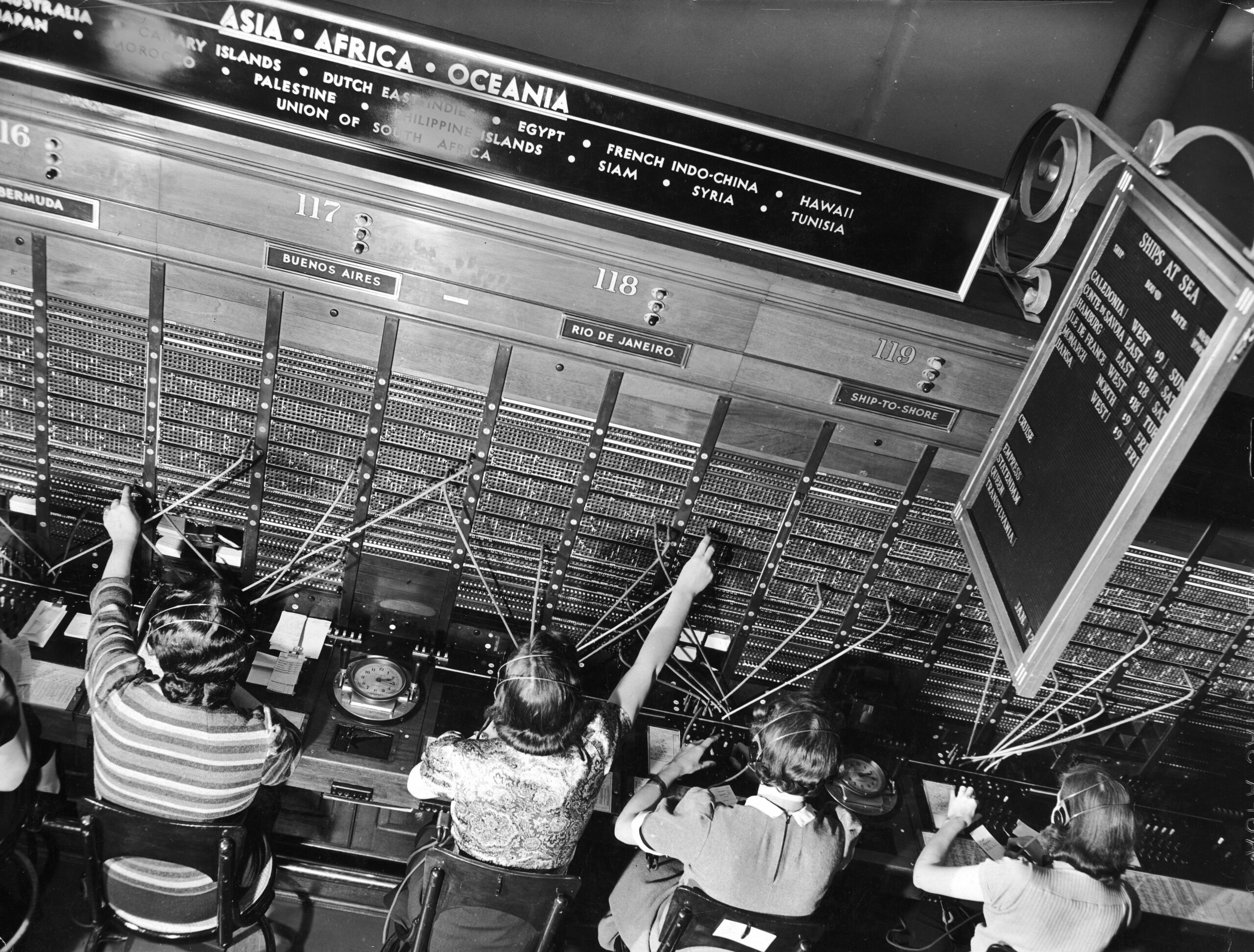
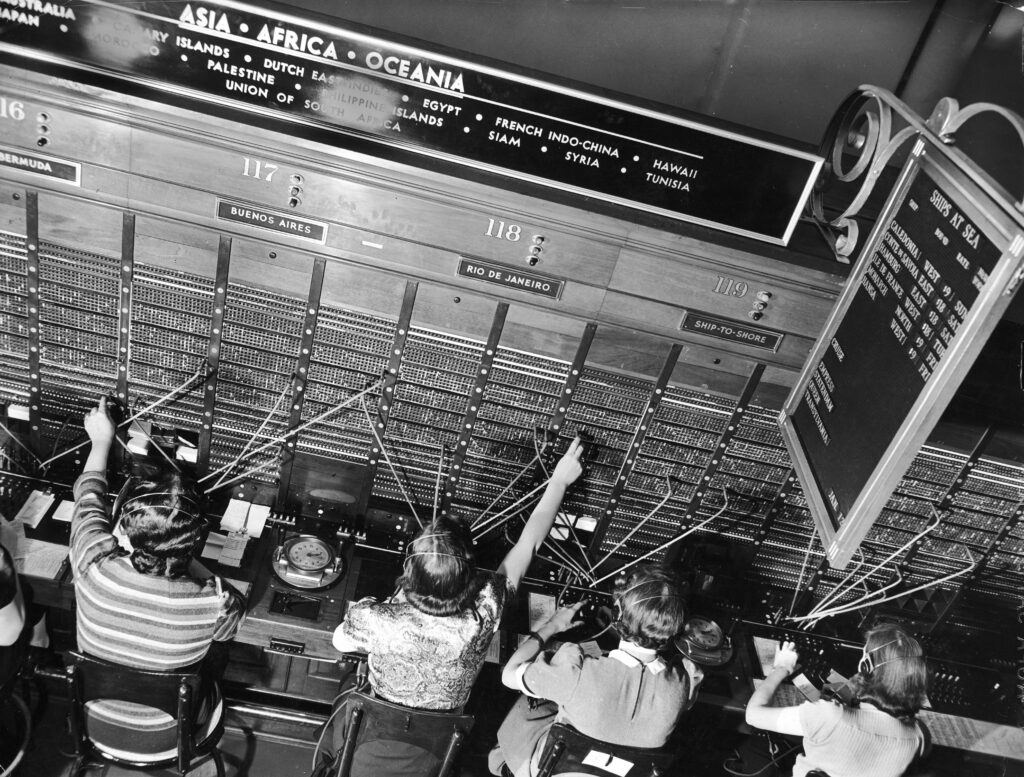
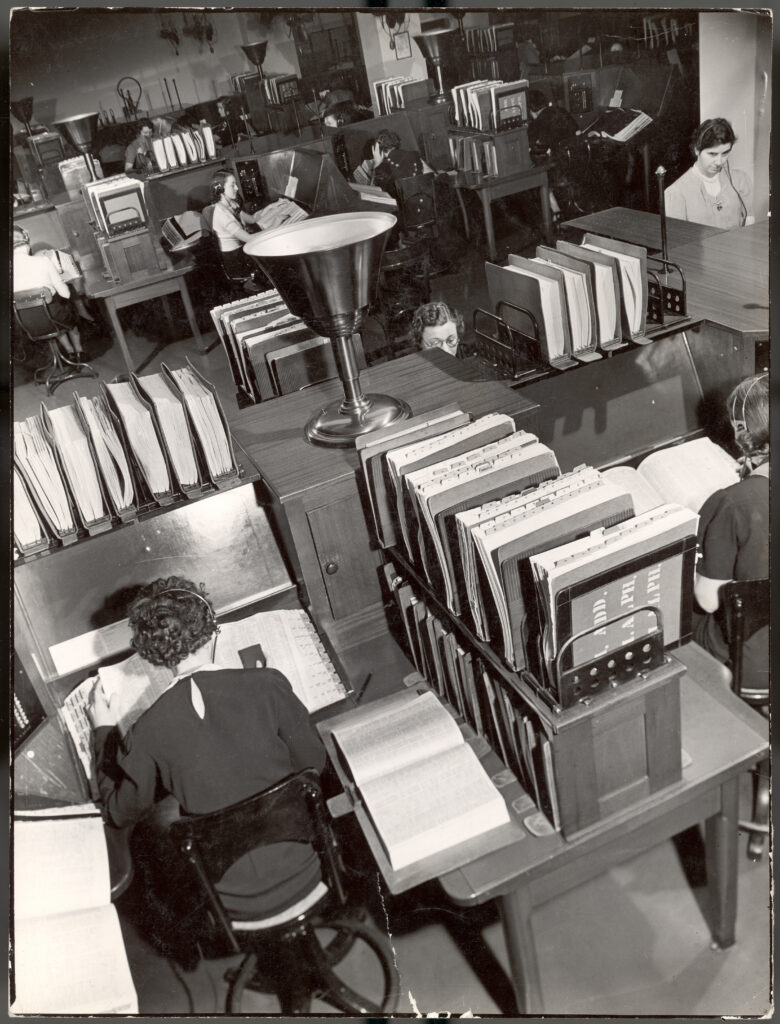
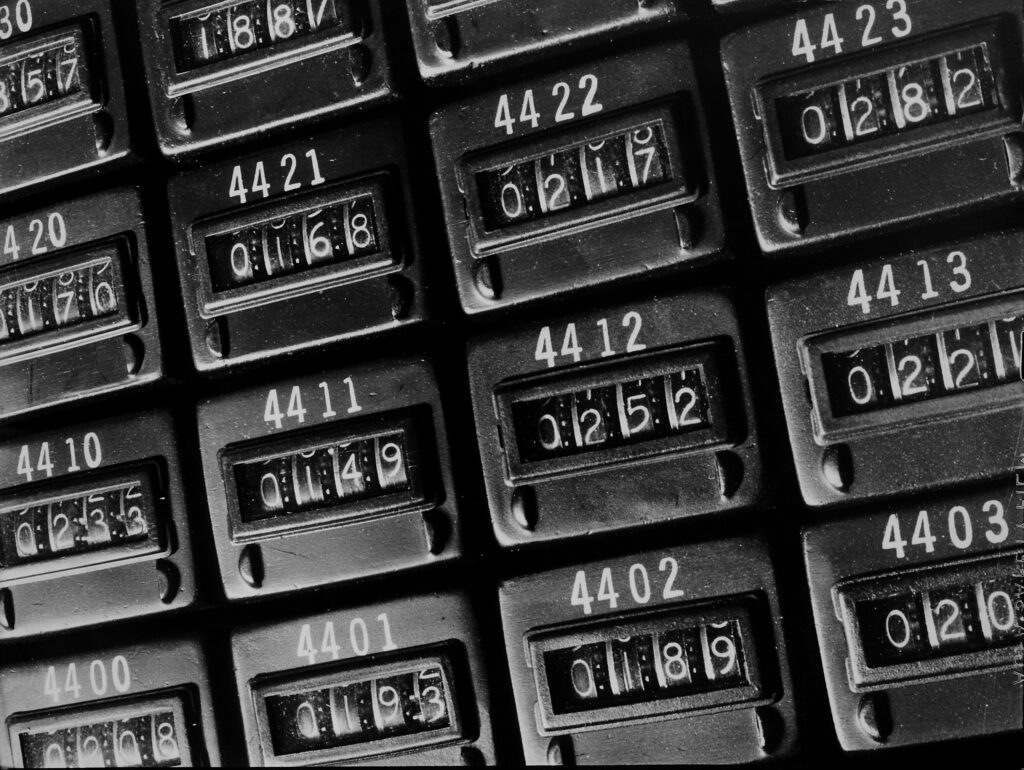
The New York Telephone Company, which was a local subsidiary of AT&T at the time, gave Bourke-White behind-the-scenes access for an essay which includes many images that are delightfully anachronistic to the modern viewer. One shows human telephone operators surrounded by phone books that were used to answer calls to Information. Another image shows operators on the international desk manually plugging wires into specific holes in order to complete overseas calls. Another shows a board with tiny meters that tracked usage for individual phone bills.
Bourke-White also documented the mechanics of how a call was made. In LIFE’s original story the photos were part of a sequence which, combined with interpretive illustrations, documented the Rube Goldberg-type chain of events required to connect callers. Bourke-White, as she always did, found beauty in the details.
Today’s world of digital calling is undoubtedly more efficient. These photos are a record of a technological system that was wondrous for decades, but has long since been relegated to the scrap heap.

Operators routed international calls at a switchboard in New York City, 1939.
Margaret Bourke-White/Life Picture Collection/Shutterstock
Telephone operators consulted reference books in the course of answering calls to “Information,” 1939. Nationally, information operators fielded two million calls a day.
Margaret Bourke-White/Life Picture Collection/Shutterstock
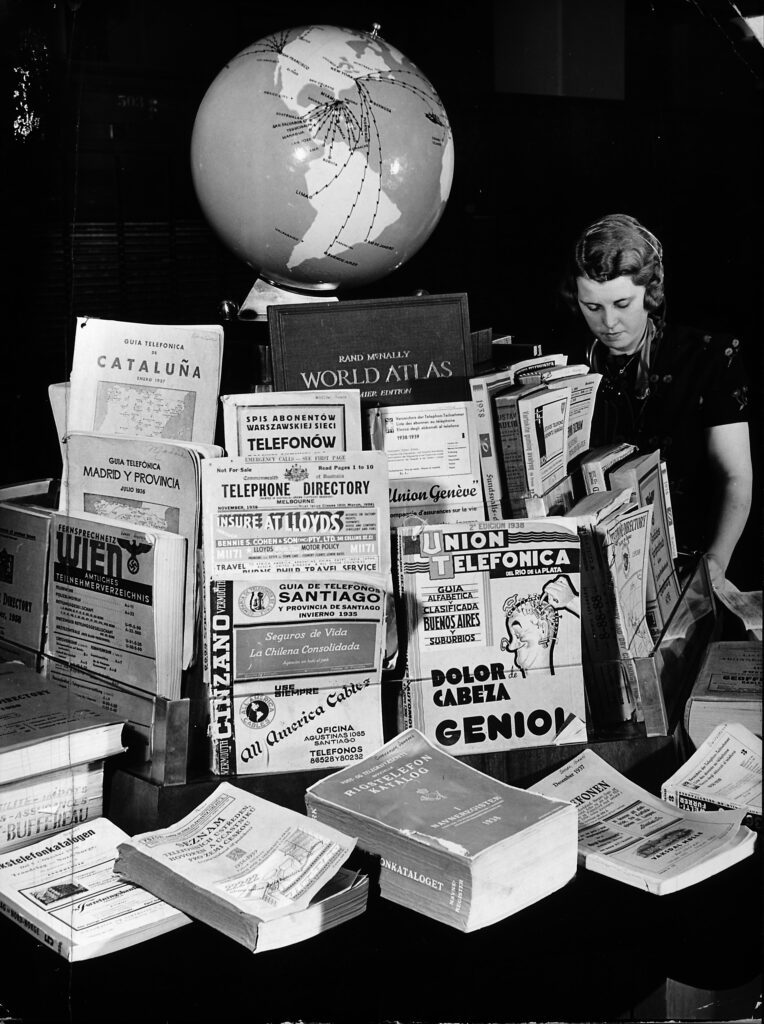
These international directories were kept nearby as a resource for AT&T phone operators connecting overseas calls, 1939.
Margaret Bourke-White/Life Picture Collection/Shutterstock
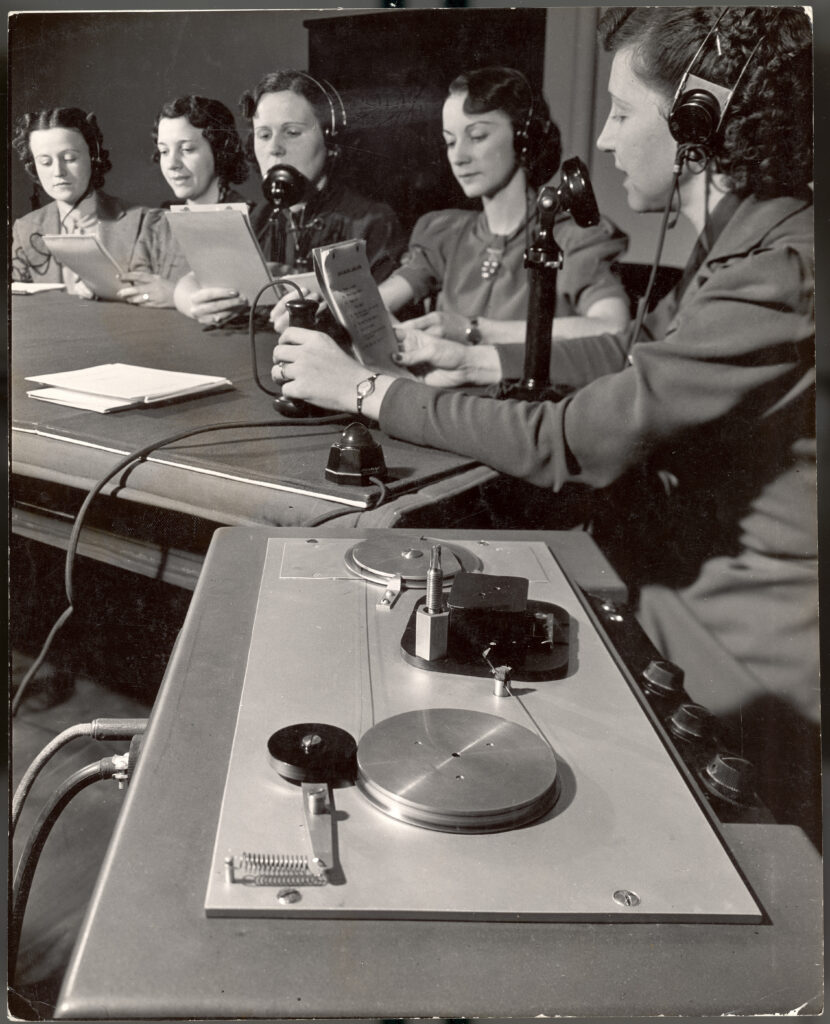
As part of their training, novice telephone operators spoke into a voice mirror—a recording device which played the voice right back—so that they could hear if they were speaking clearly enough, 1939.
Margaret Bourke-White/Life Picture Collection/Shutterstock
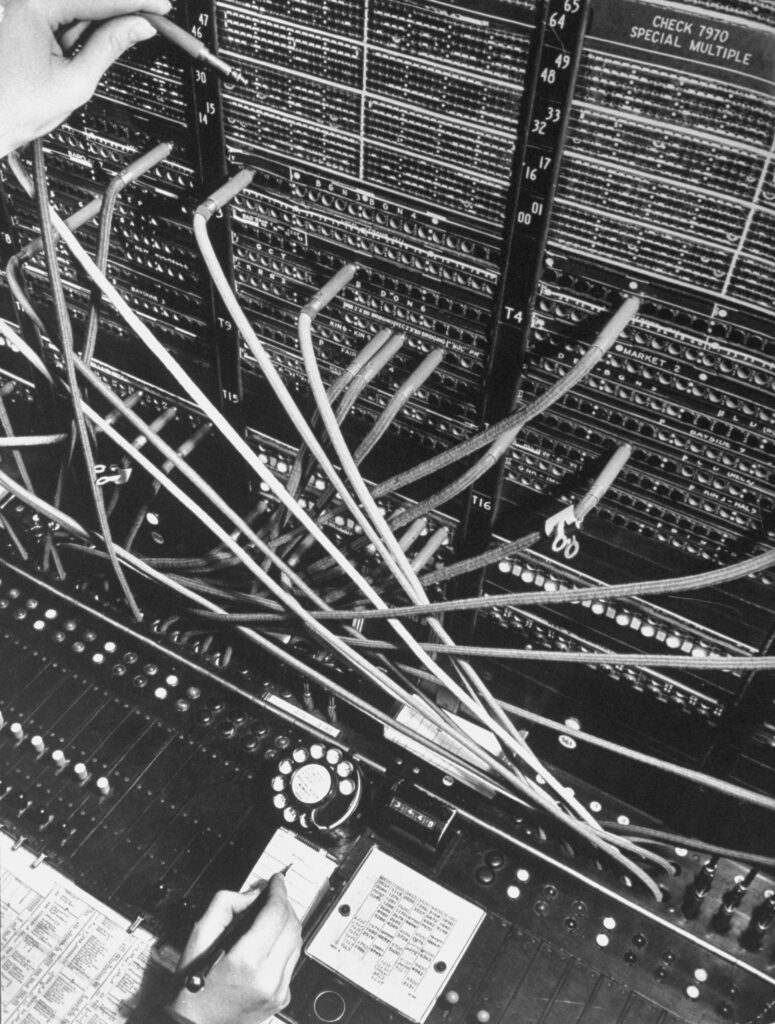
An operator worked an AT&T telephone switchboard in New York City, 1939.
Margaret Bourke-White/LIfe Picture Collection/Shutterstock
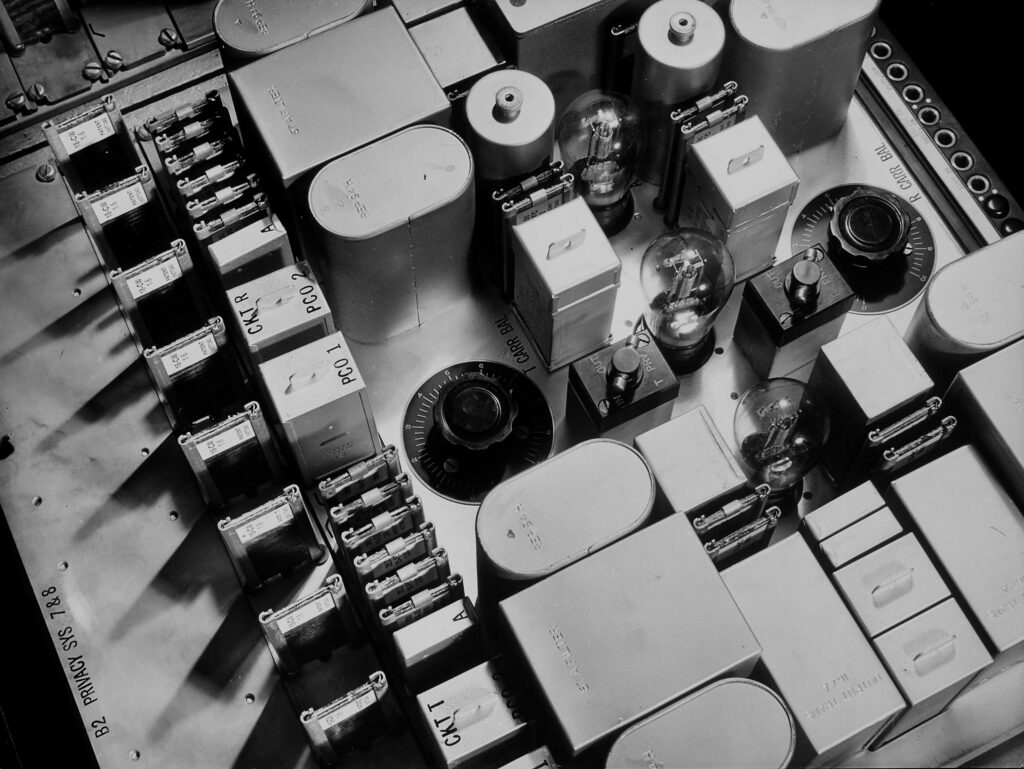
In 1939 this voice-scrambling technology helped AT&T protect the privacy of overseas calls from ham radio operators.
Margaret Bourke-White/Life Picture Collection/Shutterstock
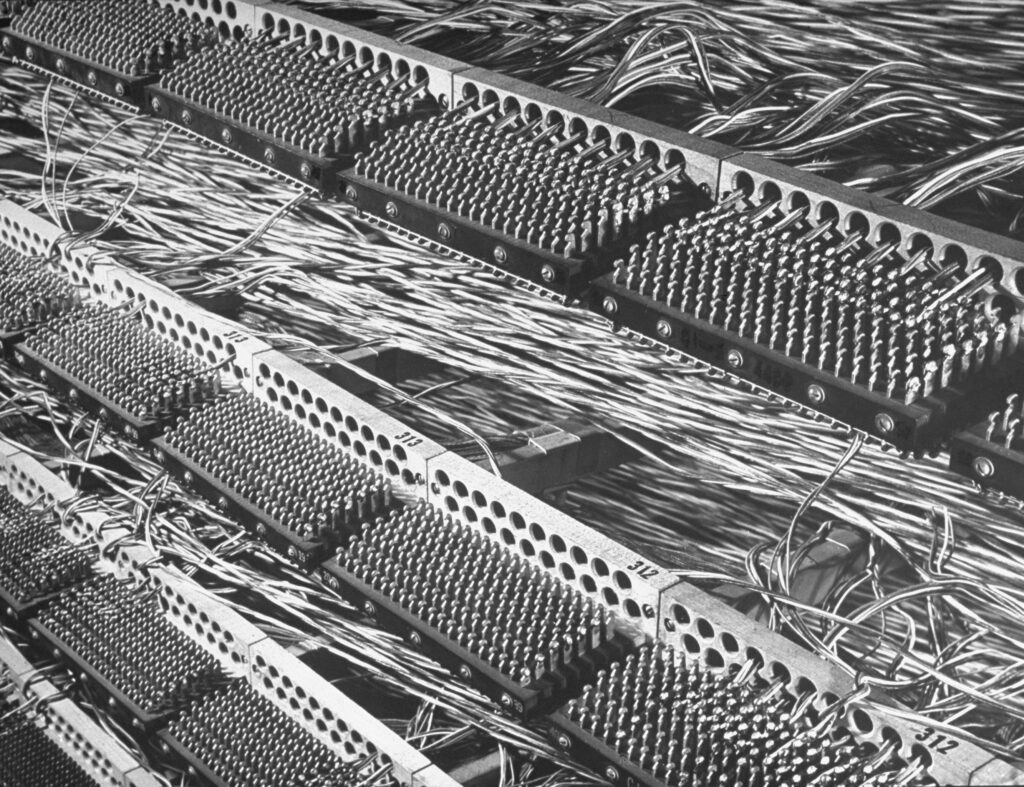
For a 1939 story on how telephone calls worked, this photo showed part of a huge distributing frame studded with terminal stripes into which each telephone was directly connected to its individual terminal point at the New York Telephone Co. office.
Margaret Bourke-White/Life Picture Collection/Shutterstock
In a 1939 story that explained the details of how a phone call was made, the dials in this picture show a call going to 245-4400, which was the phone number of the LIFE magazine offices.
Margaret Bourke-White/Life Picture Collection/Shutterstock
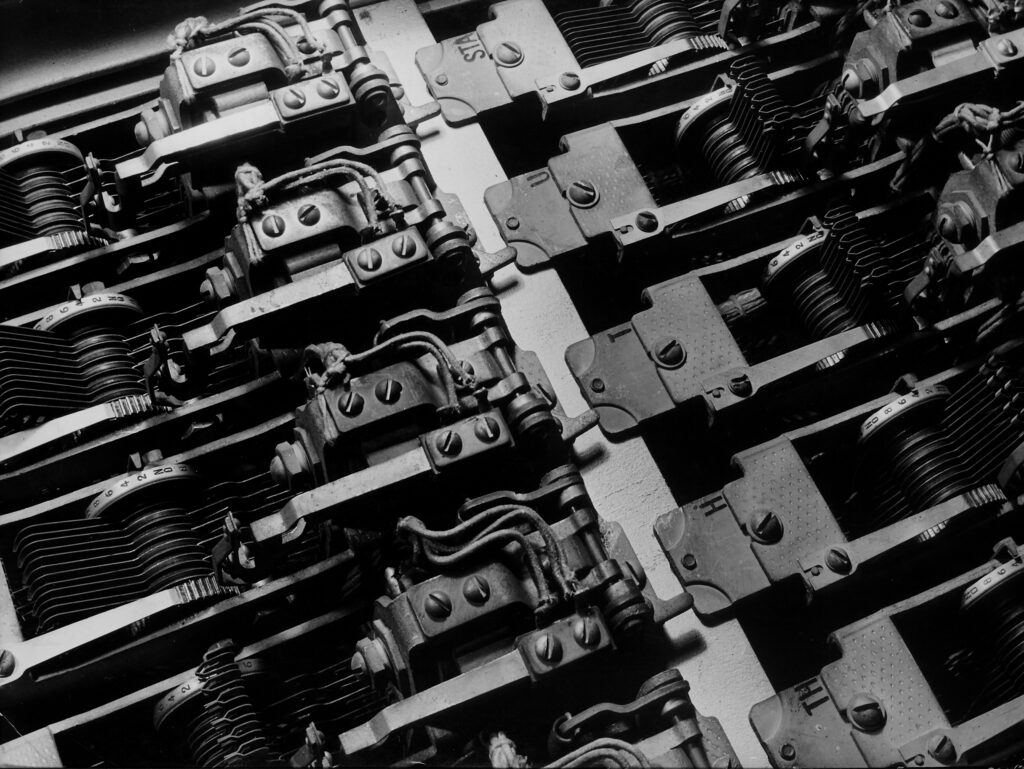
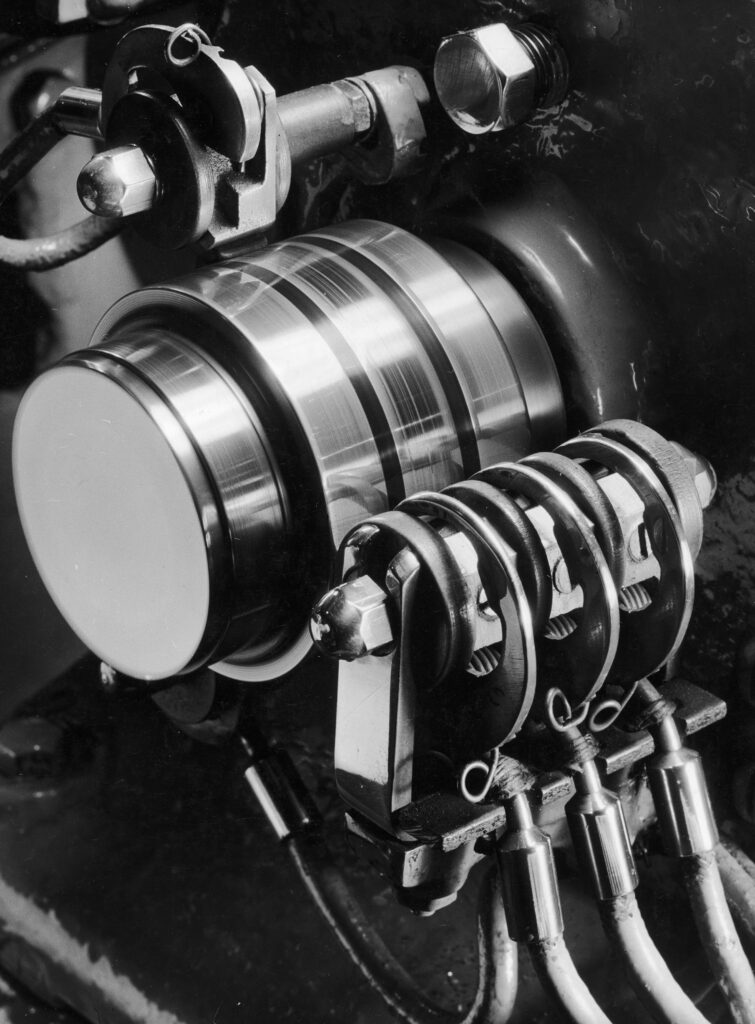
These mechanisms made the ringing noise in a dial-up telephone, 1939.
Margaret Bourke-White/Life Picture Collection/Shutterstock
These meters registered calls and determined a user’s monthly phone bill, 1939.
Margaret Bourke-White/Life Picture Collection/Shutterstock
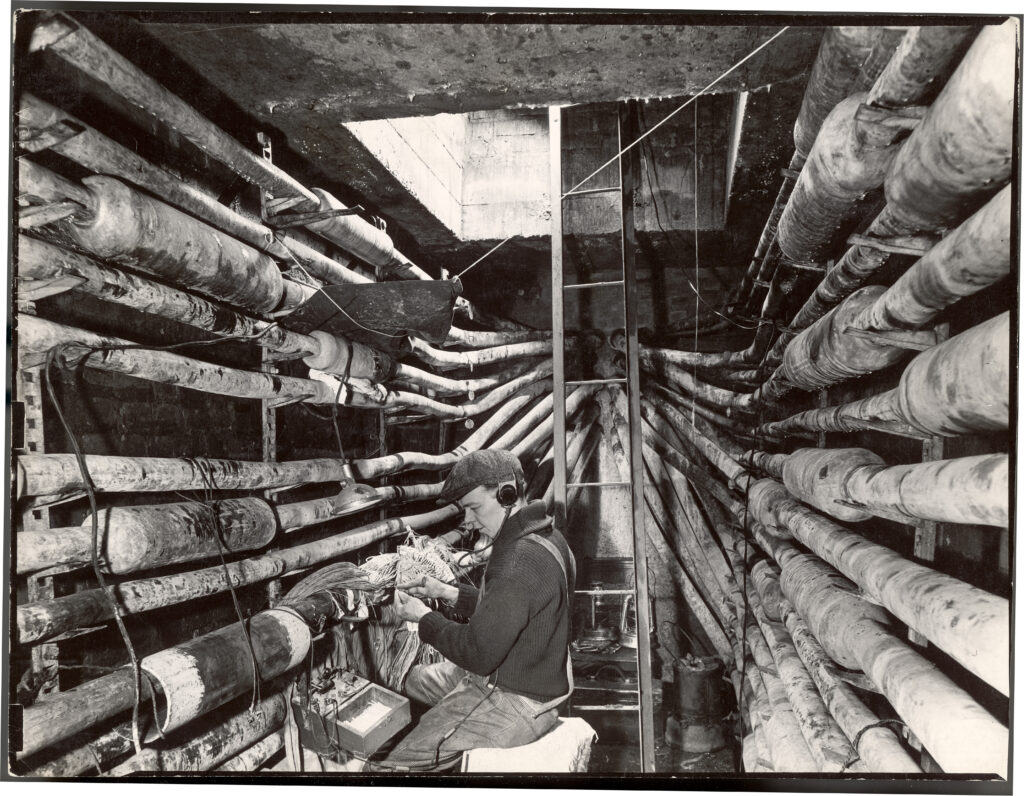
A telephone repair man worked on a network of cables that ran beneath the New York City streets for the New York Telephone Co., 1939.
Margaret Bourke-White/Life Picture Collection/Shutterstock
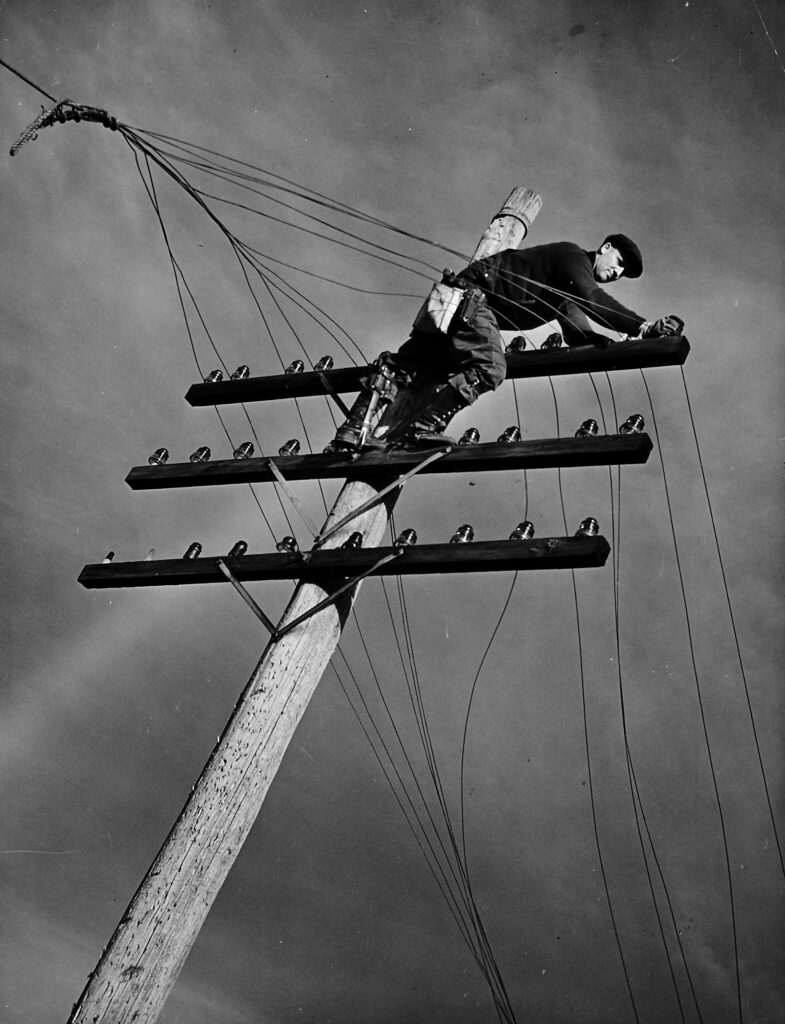
New York Telephone Co. lineman Wallace Burdick made repairs on telephone lines between Vallhalla and Brewster, 1939.
Margaret Bourke-White/Life Picture Collection/Shutterstock