Belmont Park is one of America’s grandest race tracks, and its 1.5-mile oval is also the largest in North America. In September 2026 a new version of the track is opening, and this edtion will actually be the third construction on the same site just outside New York City. The previous iteration lasted from 1968 to 2024 before it was leveled. The original park stood from 1903 to 1963.
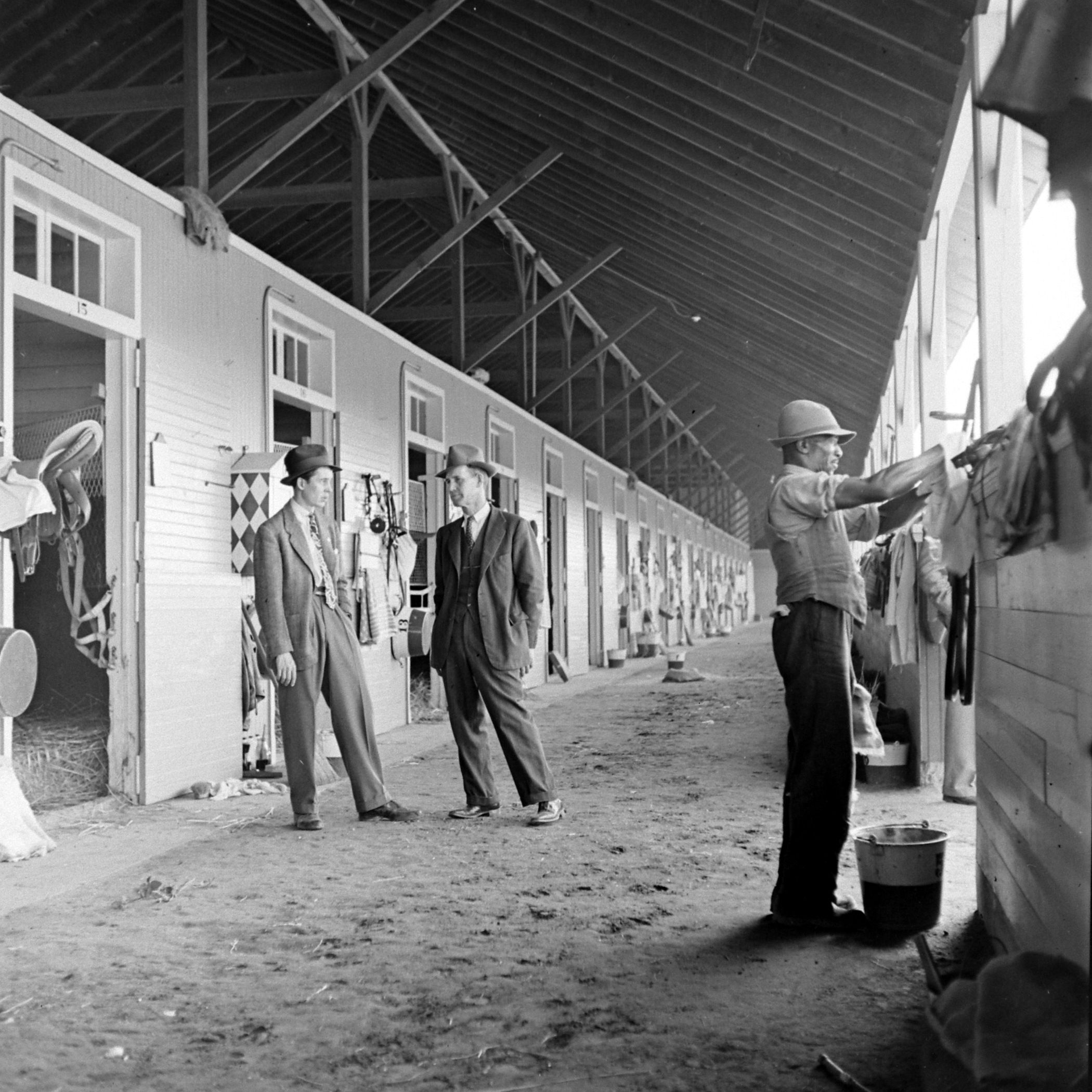
In 1940 LIFE staff photographer Alfred Eisenstaedt visited Belmont for a story on Alfred Gwynne Vanderbilt, a 27-year-old who the magazine described as “one of America’s richest young men” (the Vanderbilt family had made their fortune in railroads) and also ‘the most important figure in horse racing” because of the bang-up job he was doing running Belmont Park and also the Pimlico track in Baltimore. His two tracks each hosted a leg of horse racing’s Triple Crown.
At the time Vanderbilt had just been hired at Belmont. His task was to usher the track into a more modern age of horse racing after New York had approved pari-mutuel betting. While photographing Vanderbilt as he made his rounds at Belmont, Eisenstadt also captured the track’s charm and majesty—the stables, the march of the horses out for their morning exercises, the formality (especially compared to today) of the fans who came out to spend a day at the races.
Horse racing was a lifelong passion for Vanderbilt. He was only pulled away during World War II, when he won a Silver Star for bravery as the captain of a PT boat. In later years he bemoaned the sport’s increased emphasis on gambling instead of competition.
Vanderbilt died at home in 1999 at age 87, after having attended racehorse workouts that morning.

Alfred Vanderbilt, president of Belmont Park, spoke with trainer Lee McCoy (right) in the stables after the morning workout, 1940.
Alfred Eisenstaedt/Life Picture Collection/Shutterstock

Alfred Gwynne Vanderbilt Jr., president of Belmont Park, visited the race track’s stables, 1940.
Alfred Eisenstaedt/Life Picture Collection/Shutterstock

Alfred Gwynne Vanderbilt Jr., president of Belmont Park, visited the race track’s stables, 1940.
Alfred Eisenstaedt/Life Picture Collection/Shutterstock

Track president Alfred Gwynne Vanderbilt Jr. (center, in overcoat) surveyed the goings on at Belmont Park, 1940.
Alfred Eisenstaedt/Life Picture Collection/Shutterstock

Horses and exercise boys headed out for early morning workout at Belmont Park, 1940.
Alfred Eisenstaedt/Life Picture Collection/Shutterstock

Horses and exercise boys headed out for early morning workout at Belmont Park, 1940.
Alfred Eisenstaedt/Life Picture Collection/Shutterstock

Alfred Vanderbilt, president of Belmont Park, watched early morning workouts at the track, 1940.
Alfred Eisenstaedt/Life Picture Collection/Shutterstock

Alfred Gwynne Vanderbilt Jr., president of Belmont Park, spoke with a jockey, 1940.
Alfred Eisenstaedt/Life Picture Collection/Shutterstock

Alfred Gwynne Vanderbilt Jr. (left) at Belmont Park, 1940.
Alfred Eisenstaedt/Life Picture Collection/Shutterstock

Horse racing fans filled up Belmont Park, 1940.
Alfred Eisenstaedt/Life Picture Collection/Shutterstock

Fans attended the horse races at Belmont Park in New York, 1940.
Alfred Eisenstaedt/Life Picture Collection/Shutterstock

Horse racing fans filled up Belmont Park, 1940.
Alfred Eisenstaedt/Life Picture Collection/Shutterstock

Horse racing fans filled up Belmont Park, 1940.
Alfred Eisenstaedt/Life Picture Collection/Shutterstock

Alfred Vanderbilt, president of Belmont Park, watching race from his box, 1940.
Alfred Eisenstaedt/Life Picture Collection/Shutterstock