The following is from Kostya Kennedy’s essay in LIFE’s new special issue on Winnie-the-Pooh, at 100, available at newsstands and online:
Winnie-the-Pooh’s inner circle includes friends of various appearances, sizes, tendencies, temperaments, species. An easily frightened little pig, a rambunctious tiger, a practical rabbit, a semi-literate owl, a gloomy ass—even a single mother and her infant. When Kanga and Baby Roo first arrive on the scene, Pooh and Rabbit are visiting at Piglet’s house. It’s morning in the Hundred Acre Wood and Rabbit expresses displeasure at having woken up to find a “Strange Animal among us… An animal who carries her family about with her in her pocket!” Still more unnerving is the abruptness of their arrival. Says Rabbit: “Here we are—you, Pooh, and you, Piglet, and Me—and suddenly—”
“And Eeyore,” said Pooh.
“And Eeyore—and then suddenly—”
“And Owl,” said Pooh.
Rabbit pauses, and then: “Here—we—are,” said Rabbit very slowly and carefully, “all—of—us…”
Pooh, we understand from early on, is not the sort of bear to leave anyone out.
Kanga and Roo assimilate seamlessly into Christopher Robin’s open-hearted clique, and not long after, during an outing in the Wood, Roo slips into a stream and gets swept along by the current. “Roo’s fallen in!” Rabbit yells, and at that Pooh and the posse spring to action. Owl offers critical direction to Roo, explaining that “in a case of Sudden and Temporary Immersion the Important Thing was to Keep the Head Above Water.” Eeyore turns and drops his tail into the water that Roo might catch onto it and pull himself out, while Rabbit urges someone to “get something across the stream lower down.” It’s Pooh who discovers in the Wood a long pole and, with Kanga’s help, lays it across the stream. Roo soon drifts up against the pole and climbs safely to the shore.
The basic tenets of friendship in the Pooh stories are that friends look out for one another, and that you can count on them. They’re game and they’re useful. When Pooh gets stuck for a week in the hole in the hillside that serves as Rabbit’s front door—a predicament that leaves Pooh with his North End peering out into the Wood while his South End wriggles in Rabbit’s lair—Rabbit thinks nothing of using Pooh’s legs as a towel rack.
Empathy is not necessarily first to mind, nor easy to act upon. These are young animals, after all, with a drive for self-preservation. That’s why Piglet is quite happy to peel off from a walk in the Wood and leave Pooh to confront a Woozle on his own. And it’s also why whenTigger and Roo get stranded on a high tree branch and can’t get down, Pooh takes the opportunity to eat their picnic sandwiches.
Yet empathy, finally, is the essence of it all. Eeyore’s self-pitying laments play to such effect because his audience is soft and vulnerable. When Eeyore bemoans that everyone has forgotten his birthday, Pooh and Piglet scramble to deliver him gifts. And then Eeyore, in an act of magnanimity that rises above his dour nature, contrives to take pleasure in them. Another time, on a fierce winter day, Pooh and Piglet realize that Eeyore is cold and without shelter in the snowy forest. So they build him a house at Pooh Corner.
Piglet and Pooh are especially close. “It’s always more Friendly with two,” Piglet thinks to himself when he’s looking for Pooh. And the pair have become the saccharine heroes of so many memes (“We’ll be Friends Forever, won’t we, Pooh?” asked Piglet. “Even longer,” Pooh answered.) The BFF treacle sells T-shirts, but it’s the group’s collaborative nature, the comfort of togetherness, that sticks with the reader (or readee). By and by they’re all friends in the Wood. Kanga spends a day teaching Pooh to jump. Rabbit and Roo scheme up activities together.
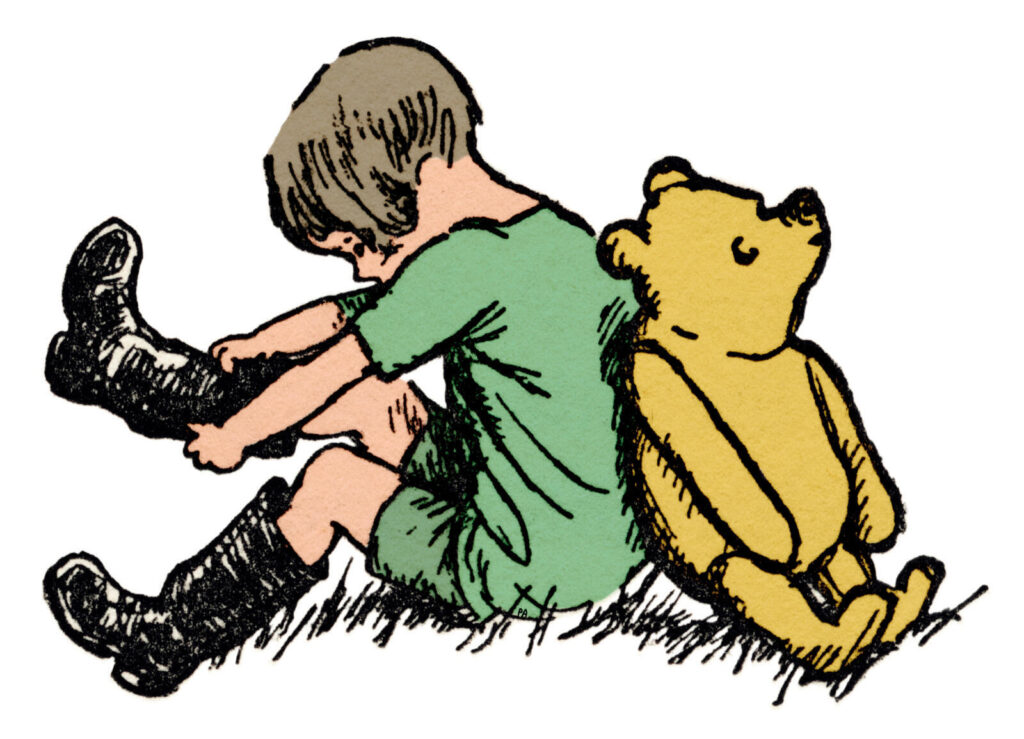
Pooh sits on the ground and goes back-to-back with Christopher Robin, providing a brace so that Christopher Robin can more easily pull on his boots. Forty-some years before Bill Withers set the notion to lyrics, the inhabitants of the Hundred Acre Wood knew they needed someone to lean on.
Or several someones. When the newly arrived Tigger needs breakfast and doesn’t know what to eat, Pooh surrenders a few pawfuls of honey. Then Piglet pushes over some of his haycorns. Then Eeyore leads Tigger to graze at a special patch of thistles. At last Tigger finds his flavor at Kanga’s house, slurping up some of Roo’s Strengthening Medicine—much to Roo’s delight.
The title of each of the 20 stories that comprise the volumes Winnie the Pooh and The House at Pooh Corner begin with a two-word lead-in. “In Which Pooh Goes Visiting and Gets Into a Tight Place,” for example. Or “In Which Rabbit Has a Busy Day and We Learn What
Christopher Robin Does in the Mornings.”
About 70 years after those books first appeared, another enormously popular series of stories burst across the entertainment culture, a series that also featured a cast of individual characters comically intermingling as they got into adventures and misadventures of their own
making. Those stories formed a long-running television show and they followed a two-word title lead-in that echoed the Pooh collection’s. “The One With the Chicken Pox,” a Season 2 episode was called. Or, in Season 3, “The One Where No One’s Ready.”
That TV show was Friends. ▪
Here are a selection of images that touch on the rich narrative celebrated in LIFE’s new issue Winnie-the-Pooh: The World’s Most Wonderful Bear, available at retail and HERE.

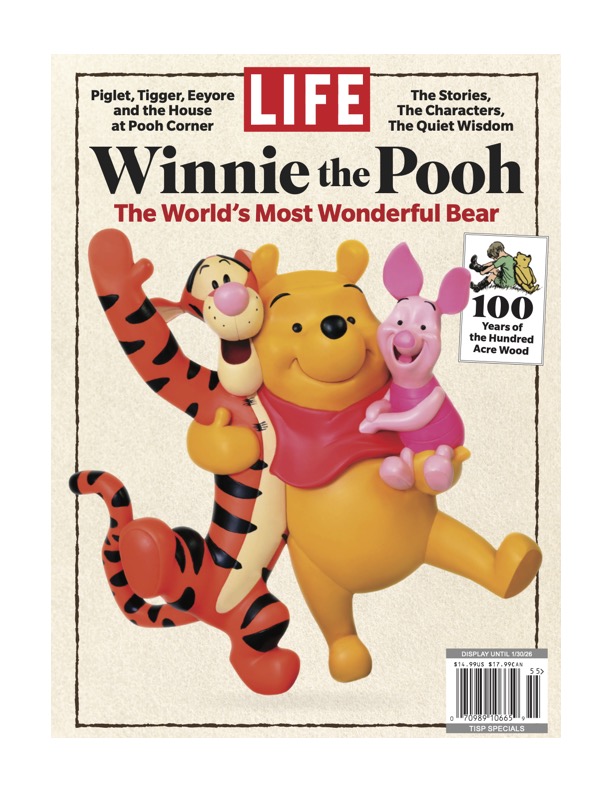
Cover images: TGlyn Jones/Alamy; (inset) © Ernest H. Shepard/BuyEnlarge/ZUMA Press; (stock) Toru Kimura/Getty Images; enjoynz/Getty Images
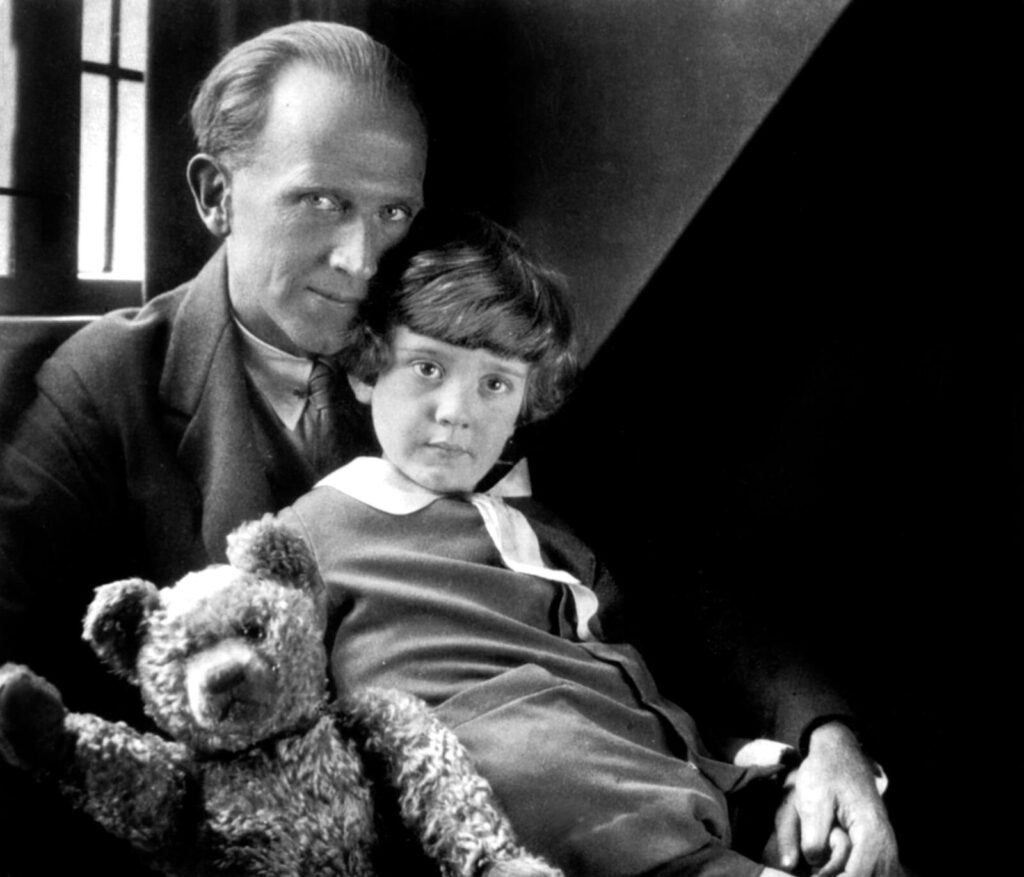
A.A. Milne with his son, Christopher Robin, and the stuffed bear Christopher Robin originally called Edward. The early Winnie-the-Pooh short stories were based on tales Milne made up to entertain Christopher Robin.
Getty Images
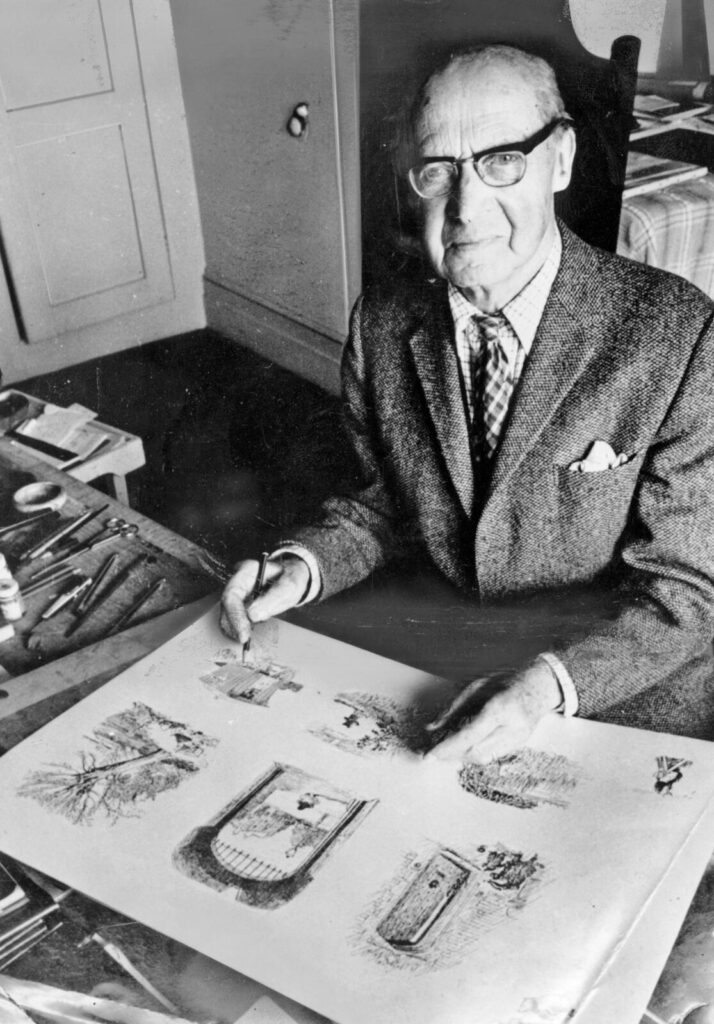
E. H. Shepard, here in 1976, was a prolific painter before he turned to illustration. He modeled his drawing of Winnie-the-Pooh after his own son’s bear, called Growler.
Getty Images
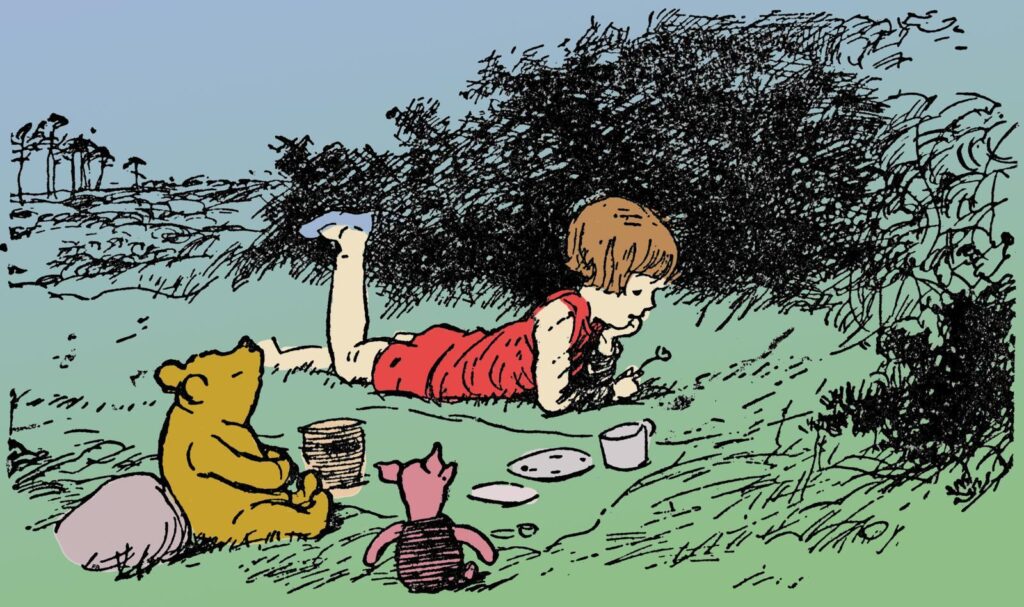
Christopher Robin and Pooh had each other’s back in this illustration from A.A. Milne’s first Winnie-the-Pooh book, which came out in 1926.
© Ernest H. Shepard/BuyEnlarge via ZUMA Press Wire
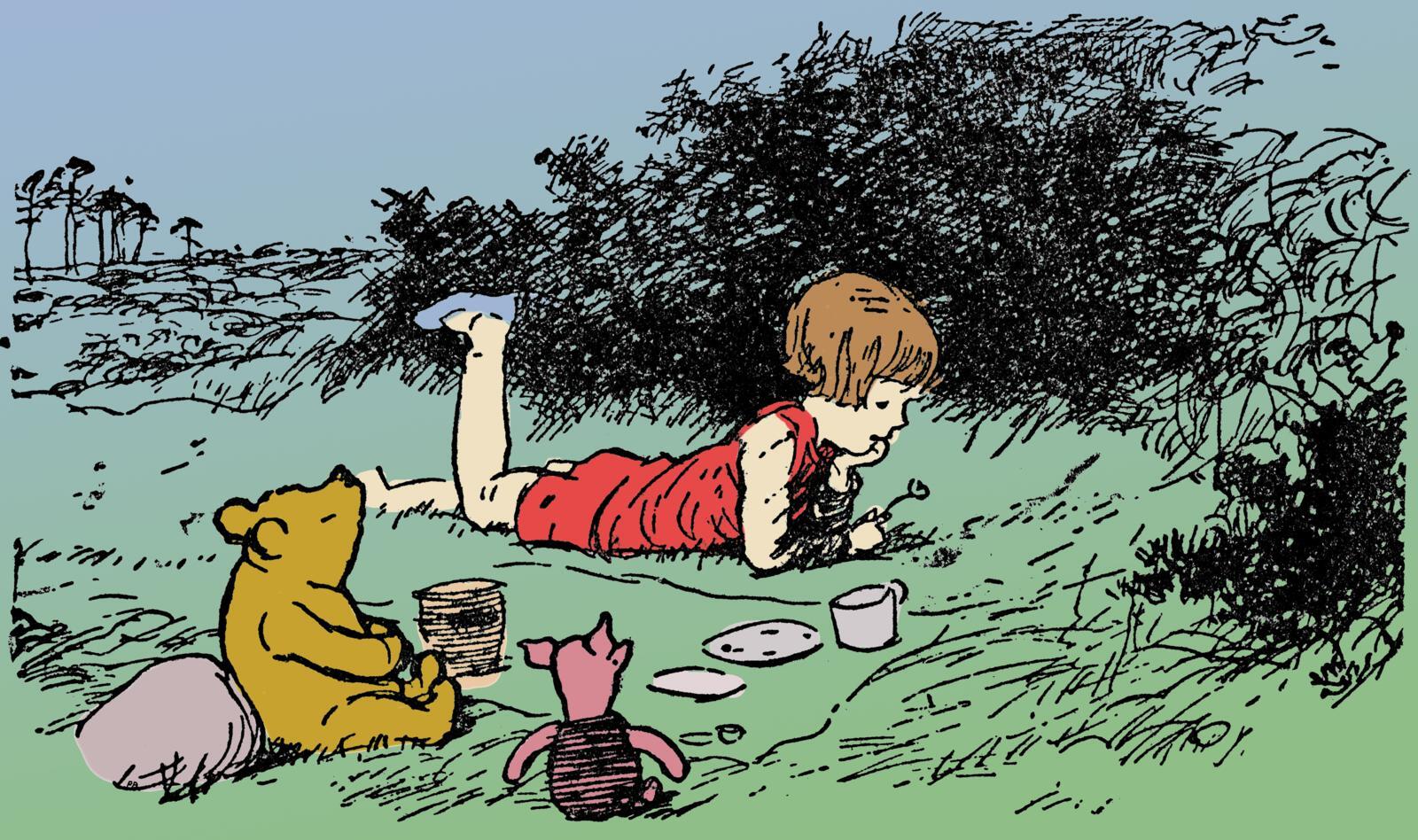
Pooh, Piglet and Christopher Robin from A.A. Milne’s 1926 “Winnie-the-Pooh,” the first illustrated book with these characters.
ZUMAPRESS.com
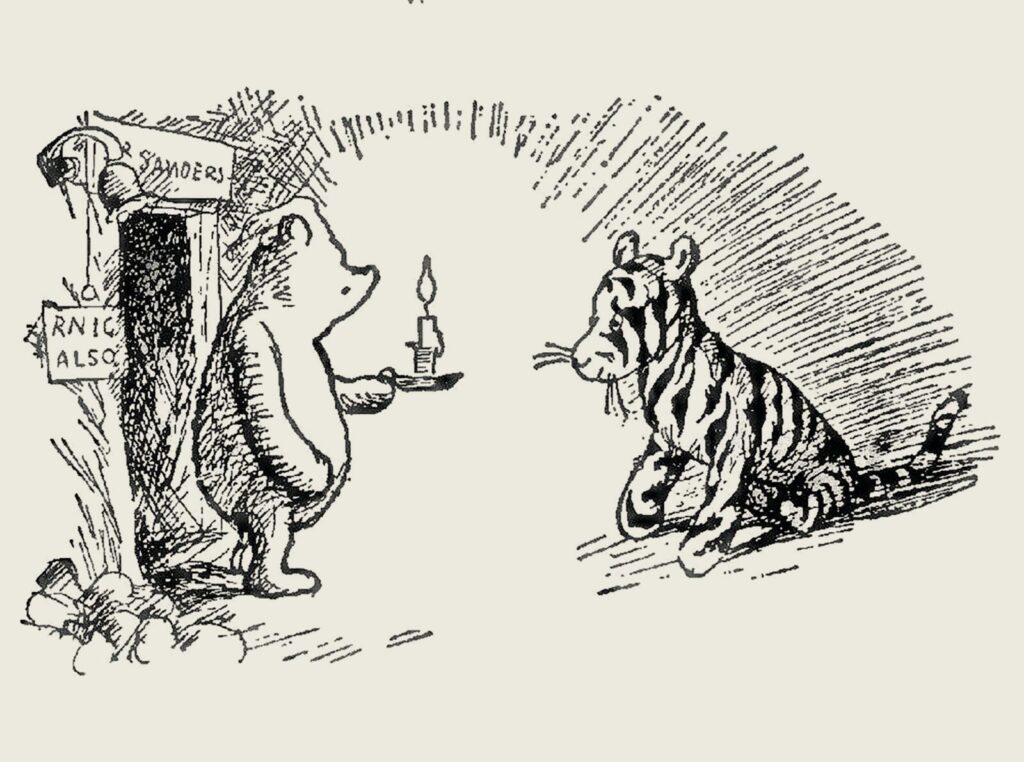
Pooh met Tigger in Milne’s second collection of Winnie-the-Pooh stories. The illustration is by E.H. Sheppard.
ZUMAPRESS.com
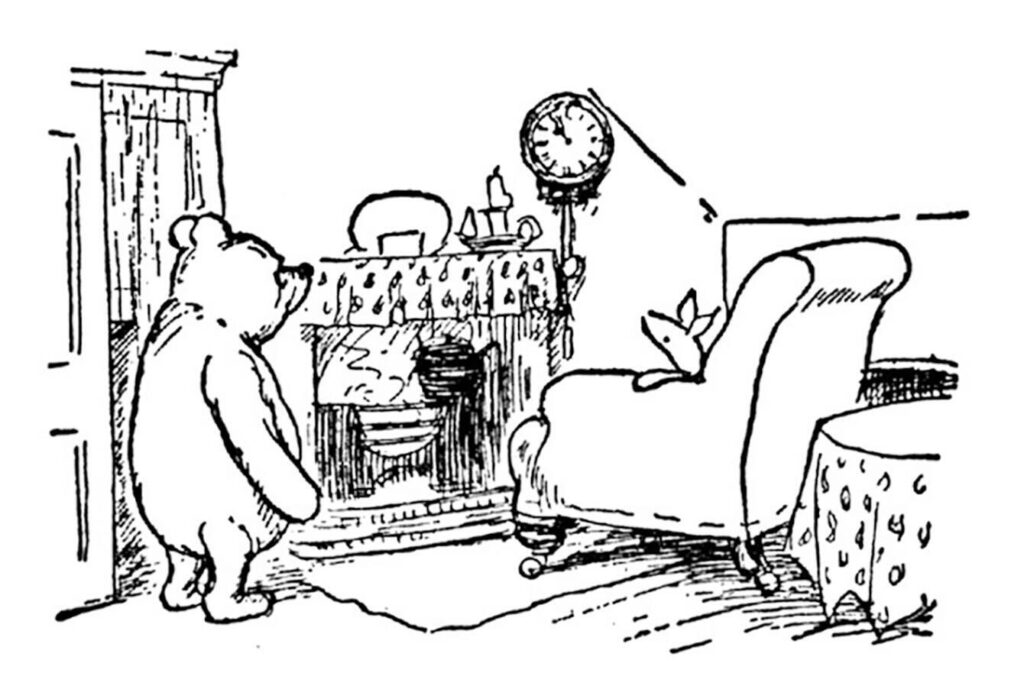
Pooh and Piglet in A.A. Milne’s 1926 collection The House on Pooh Corner.
ZUMAPRESS.com
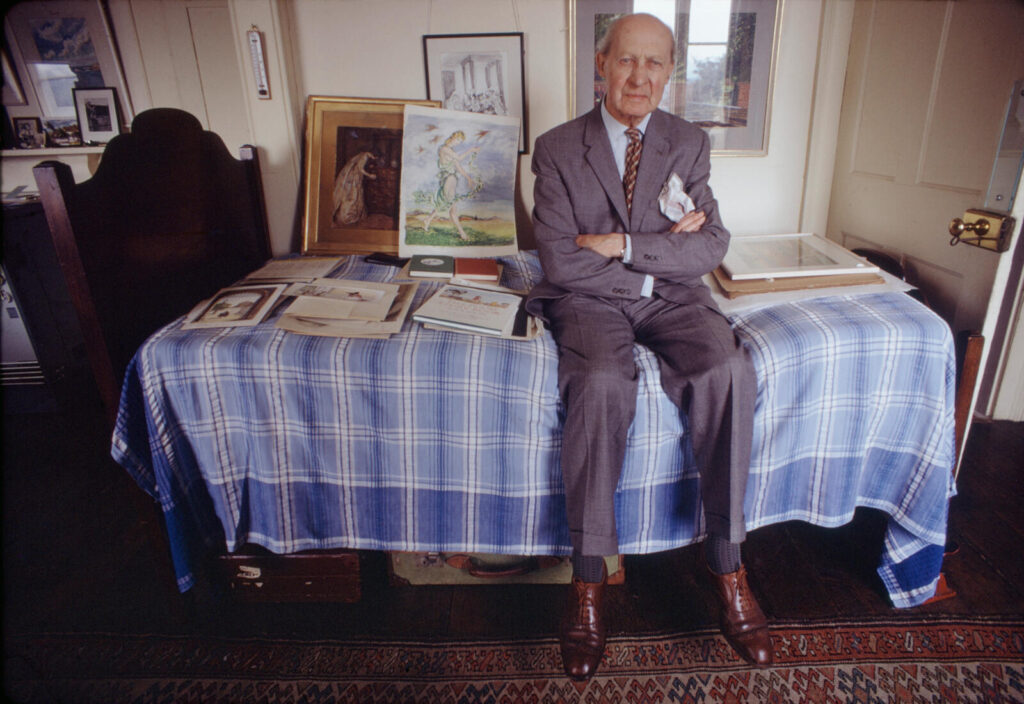
Ernest Shepard in 1969 (opposite). In addition to the Pooh books, he illustrated children’s classics such as The Wind in the Wilows and The Secret Garden.
David Montgomery/Getty Images
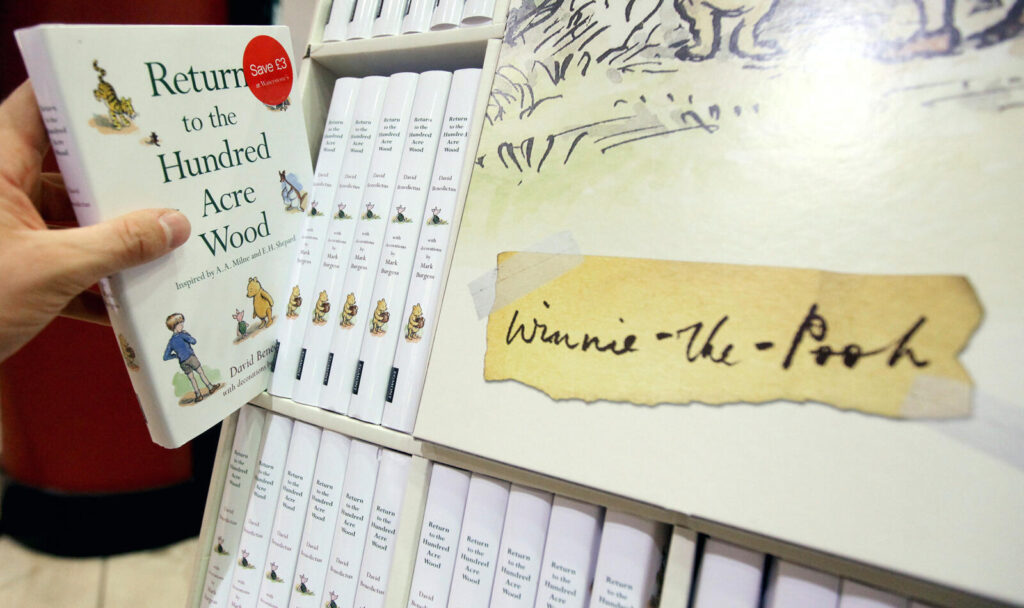
This 2009 novel picked up where the Milne stories left off.
AFP via Getty Images
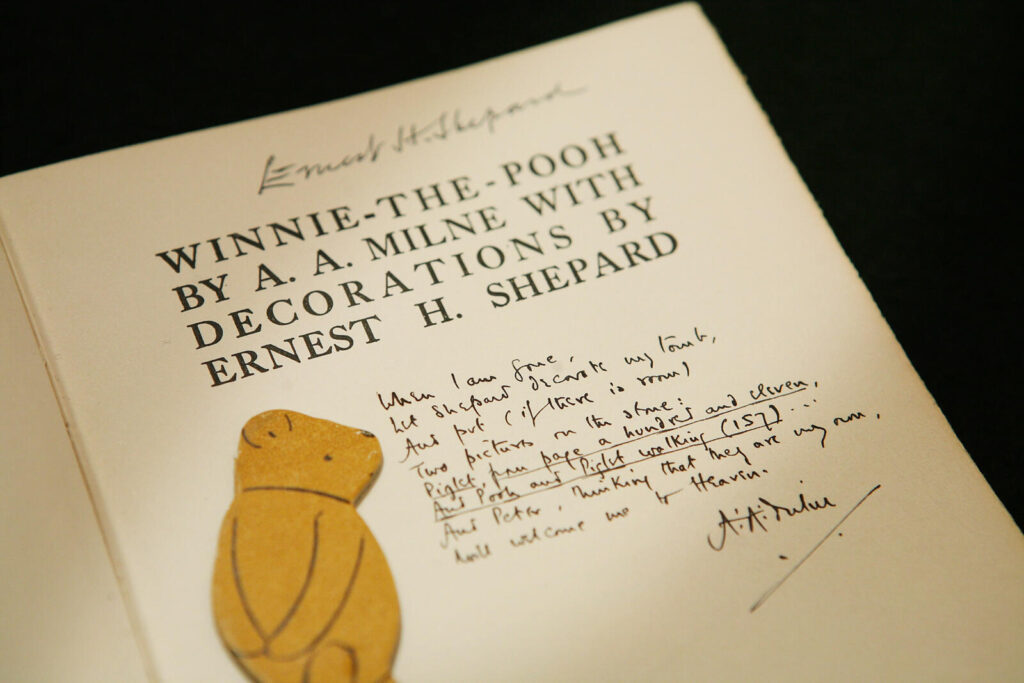
This rare Winnie-the-Pooh book featured an inscription from author A.A. Milne asking for artist E.H. Shephard to decorate his tomb.
Peter Macdiarmid/Getty Images