Americans who are not all that well versed in history may only know Charles de Gaulle as a man with an airport in Paris named after him.
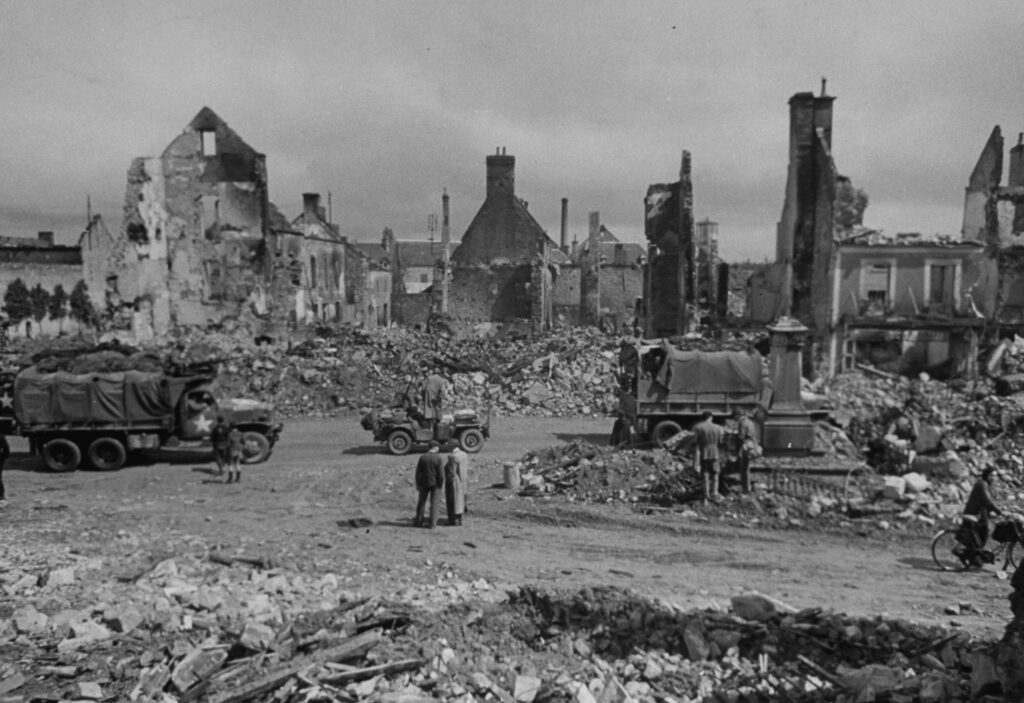
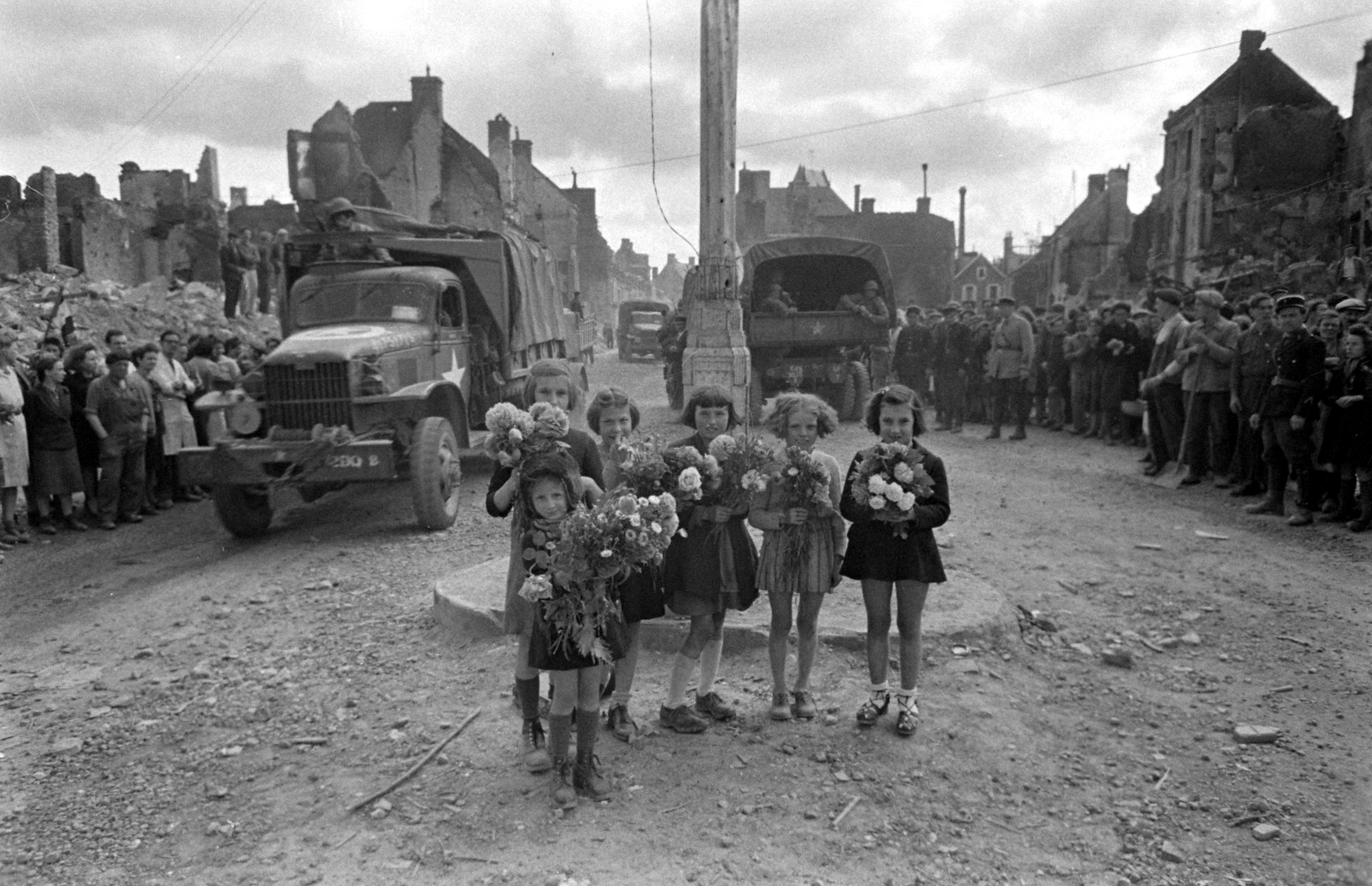
But if you want to know why that airport is named for him, take a look at the photograph of a group of young girls assembled in the square of a bombed-out French town. Look at the hope they have, despite the rubble surrounding them.
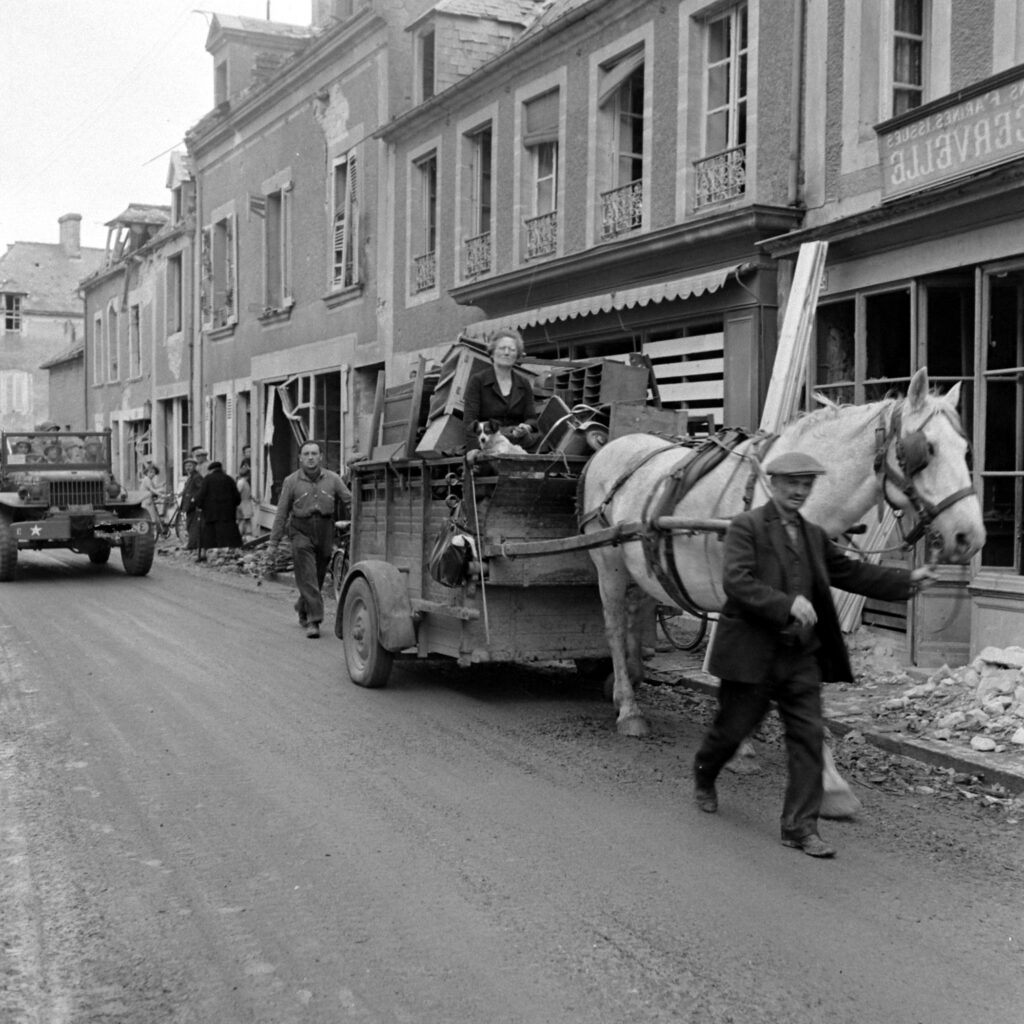
The photo was taken was June 14, 1944. That is eight days after the D-Day invasion began the process of liberating Western Europe, and six days after a June 8 attack that devastated Isigny, destroying about sixty percent of the French town.
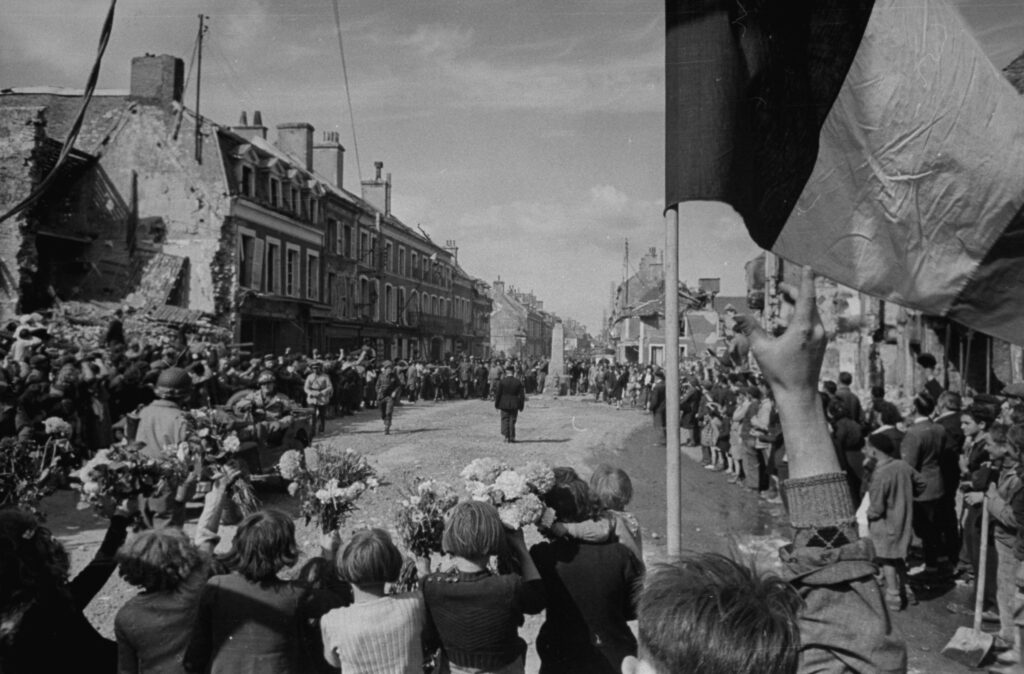
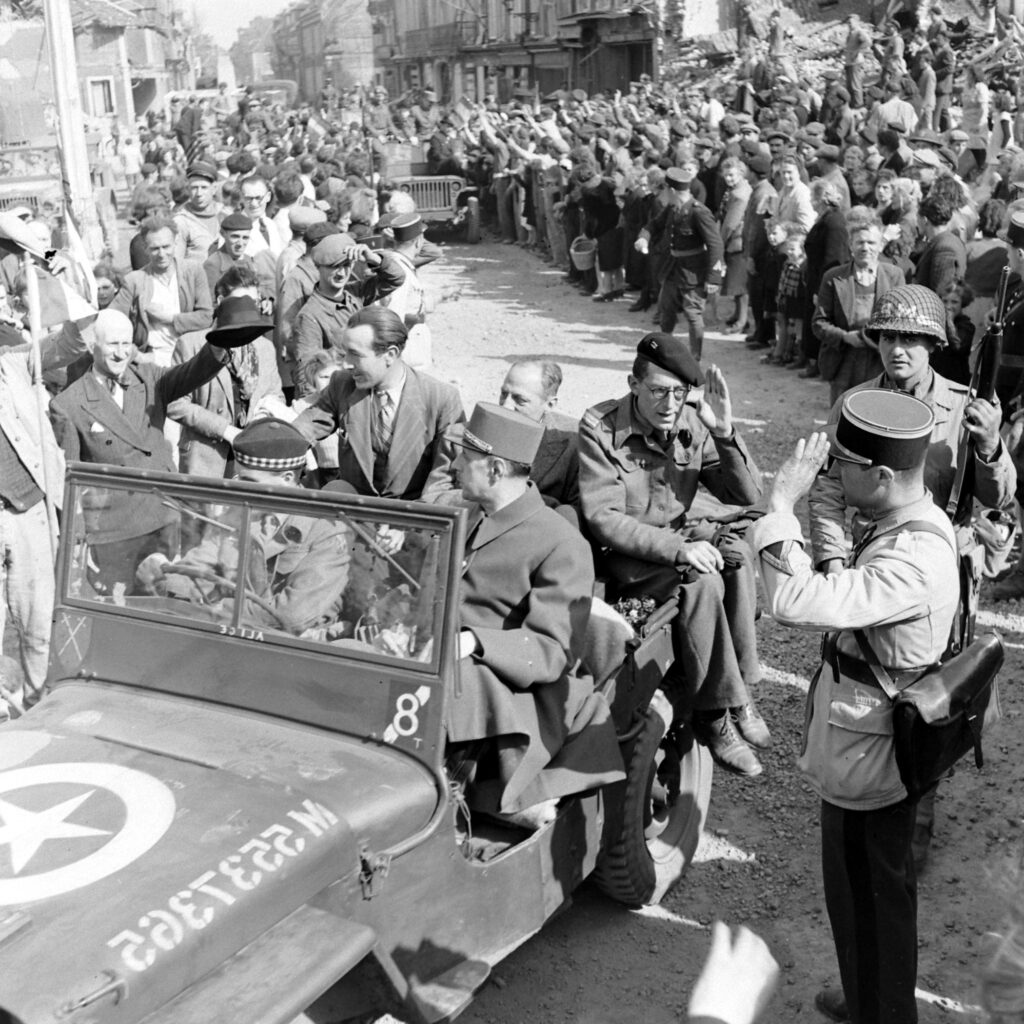
They girls assembled because people in Isigny had been told, with only a half-hour’s notice, that Charles de Gaulle was coming. De Gaulle was the leader of Free France, which formed after Paris fell to the Nazis in 1940. He had been directing a government-in-exile from Great Britain for the four years since then, but his arrival in Isigny was part of his return to his home country to establish a new French government.
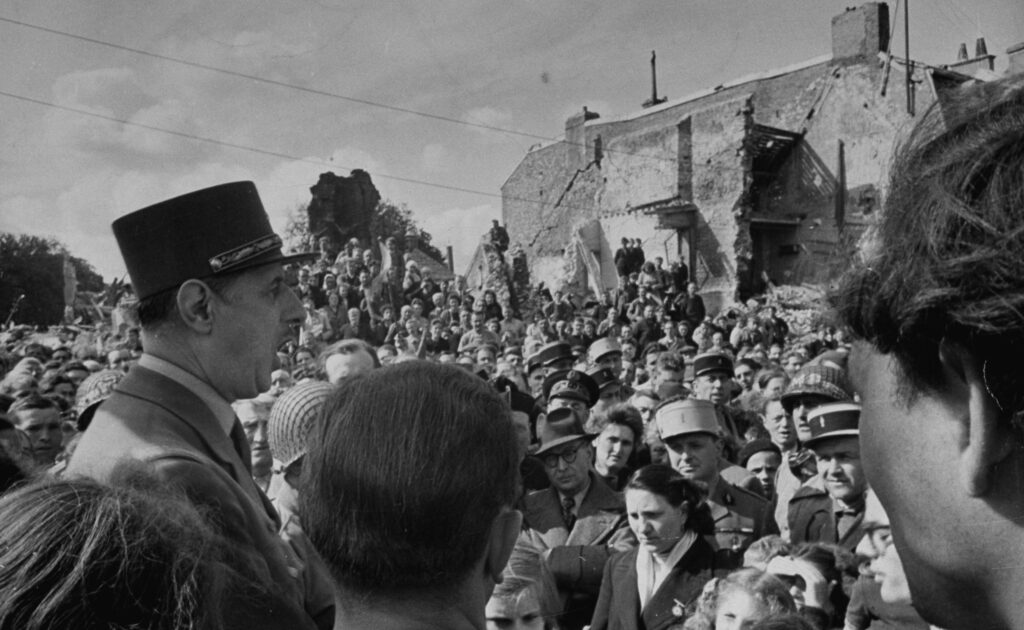
When he arrived De Gaulle told residents of the war-ravaged town, “I am very happy to see the dear and bruised population of our town of Isigny gathered here, I know what suffered Isigny. It is the sufferings that each parcel of France will have to pass before reaching liberation. But I know, like you, that this test will not be useless. It is because of this ordeal that we will make the unity and the greatness of France. I want you, with me, to have a feeling of hope in your heart, and to sing the Marseillaise “
In its July 3, 1944 issue LIFE covered De Gaulle’s return to France and his visit to isigny with photos by staff photographer Frank Scherschel that showed both the leader of the resistance and the hope that his presence inspired.
The magazine’s story duscussed the political aspects of the moment, because de Gaulle’s actions were more welcome locally than they were among France’s allies, who felt it was too soon to establish a new French government. But while U.S. President Franklin Roosevelt was irked, the people of France were overjoyed. LIFE’s ended with a quote from a French playwright, Henri Bernstein, saying of De Gaulle, “Let me tell you, this is not going to make him unpopular among the French.”
De Gaulle not only served as head of France’s provisional government for three years, but would also come back to serve as President of France from 1959 to 1969, before his death in 1970.

The people of Isigny hastily gathered to welcome Charles de Gaulle after the recently bombed town learned that the leader of Free France was on his way for a visit, June 14, 1944.
Frank Scherschel/Life Picture Collection/Shutterstock
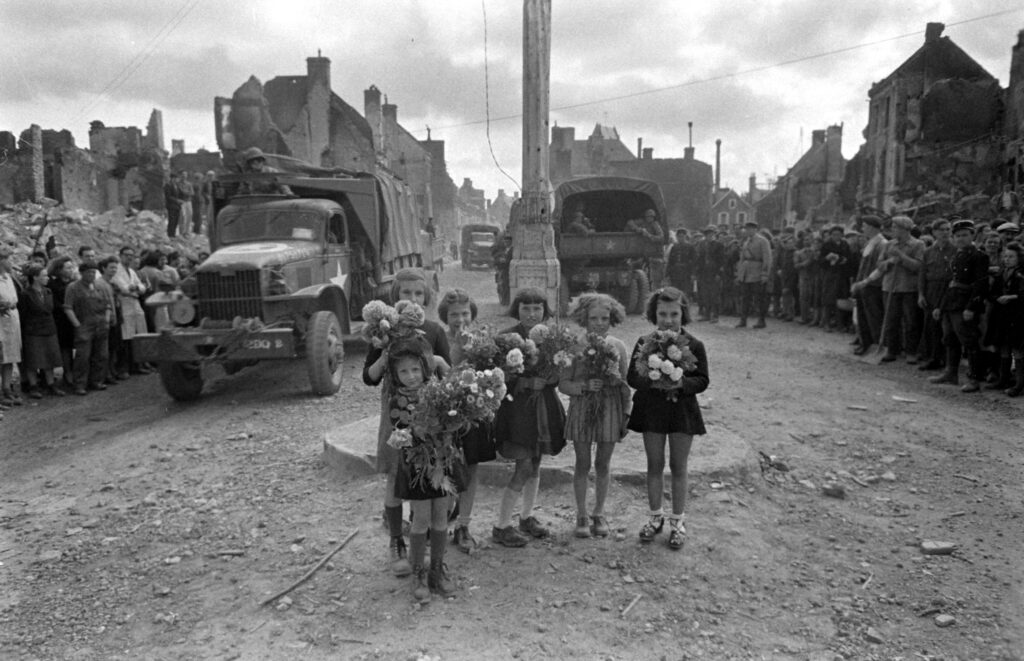
People gathered to welcome the return of Charles de Gaulle to France during World War II, June 14, 1944.
Isigny & De Gaulle – Photographs of Italian civilians during WWII
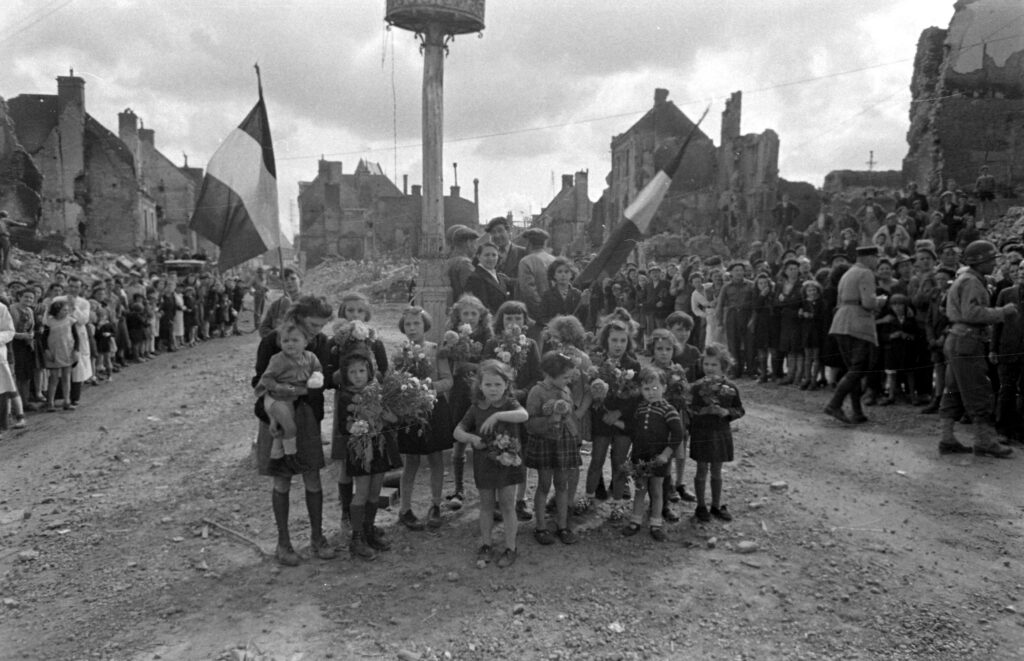
People in Isigny, France, gathered on short notice for the arrival of Charles de Gaulle as he re-established the government of France during World War II, June 14, 1944.
Frank Scherschel/Life Picture Collection/Shutterstock
Charles de Gaulle arrived in Isigny as he re-established the French government in the days following the D-Day invasion, June 14, 1944.
Frank Scherschel/Life Picture Collection/Shutterstock
Charles de Gaulle, leader of Free France, spoke to people in the recently bombed town of Isigny, 1944.
Frank Scherschel/Life Picture Collection/Shutterstock
People gathered to welcome the return of Charles de Gaulle during World War II, June 1944.
Frank Scherschel/Life Picture Collection/Shutterstock
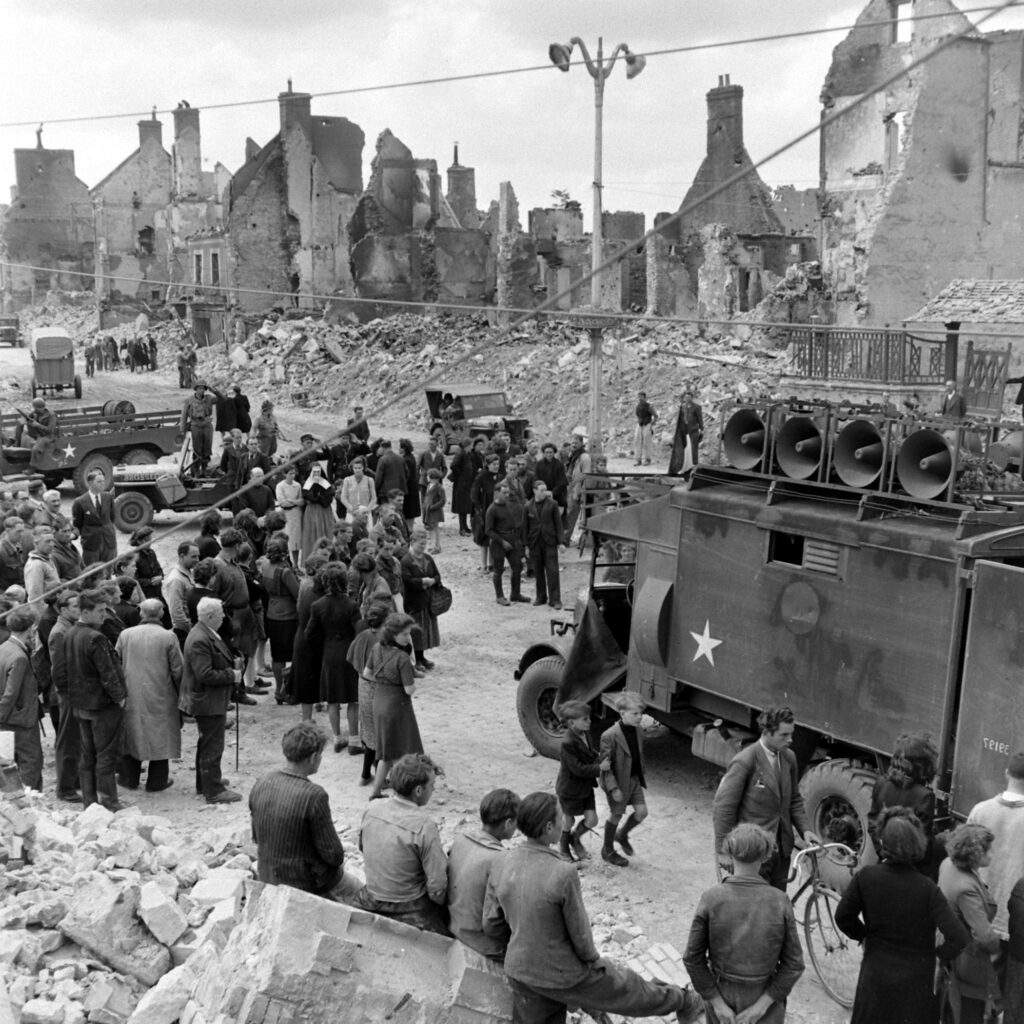
People salvaged furniture from their houses at Isigny during World War II, Italy, June 1944.
Frank Scherschel/Life Picture Collection/Shutterstock
World War II, June 1944.
Frank Scherschel/Life Picture Collection/Shutterstock