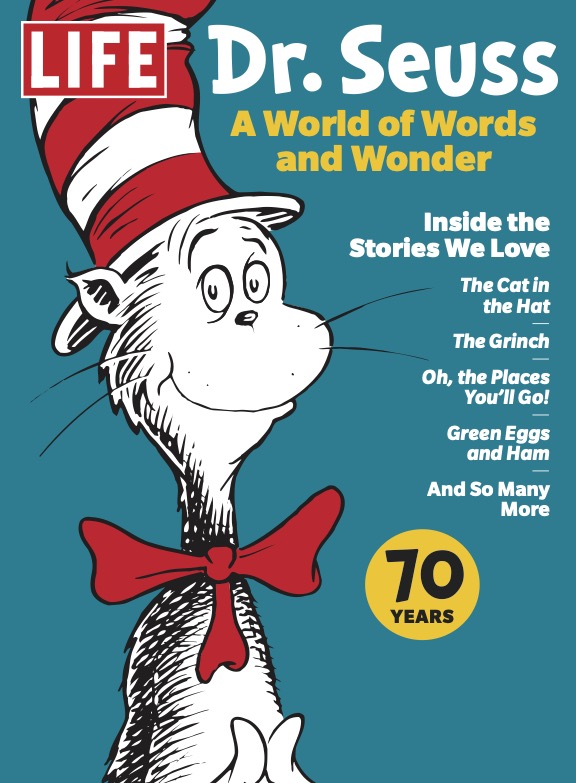
The following is from the introduction to LIFE’s special tribute issue to Dr. Seuss, available at newsstands and online.
By Eileen Daspin
Dozens of books, thousands of rhymes, billions of dollars, and at the center of it all, one beloved chaos agent: The Cat in the Hat.
As cultural footprints go, there are few Americans who have left a bigger one than Theodor Geisel, better known to generations of fans as Dr. Seuss. Geisel not only showed kids that reading was fun (and funny), but he helped change how literacy was taught, pushing educators away from the whole-word recognition approach and toward the phonics sound-it-out method. In the process, Dr. Seuss finished off primer protagonists Dick and Jane, whose vocabulary was so dull (“See Spot run!” “Oh! It is baby!”), it was considered a drag on U.S. literacy rates. His playful style helped jump-start the kid-lit business and inspire other writers to experiment with language and storytelling. He is credited with teaching little ones about responsibility (the Cat cleans the house after making a mess), self-worth (Horton’s famous “A person’s a person, no matter how small!”), and facing down bullies (Yertle the Turtle: “I know, up on top you are seeing great sights, But down here at the bottom we, too, should have rights.”)
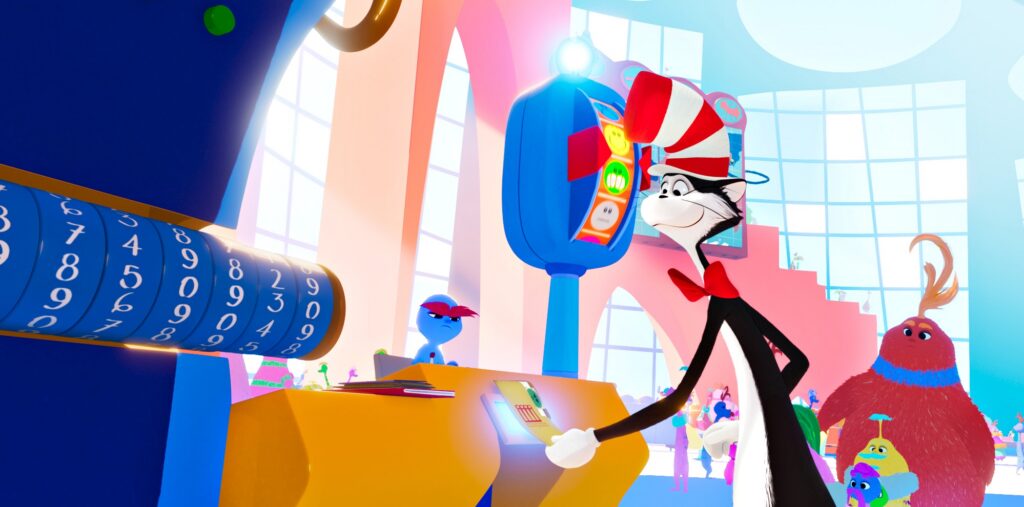
Teaching the joys of reading is no small feat at a time when daily reading for pleasure among U. S. adults is plummeting—one study shows it dropped 40 percent between 2003 and 2023. In spite of the odds, Geisel’s magic continues to resonate. Dr. Seuss Enterprises, which markets all things Dr. Seuss, is a reportedly $85 million-a-year industry, the engine behind the three Netflix Seuss adaptations; the upcoming Cat in the Hat movie with Bill Hader; Universal’s Seuss Landing attraction in Orlando; and Seussian collabs with Minecraft and Roblox, the streetwear titan Supreme, and the luxury cashmere brand NAADAM. Fans, too, keep Seuss in the conversation. The Lorax, Thing One and Thing Two, and the Cat in the Hat are perennial favorites in the Halloween costume category. There are YouTubers who rap Seuss rhymes and who imitate Shakespearean actors reading Seuss classics, influencers who track Seuss-inspired fashion trends, and TikTokers who dress up as Seuss characters or speak in nonsensical Seussian dialogue.
Geisel wasn’t even planning to be a children’s-book writer. One of his first jobs was in advertising, illustrating ads for an insecticide called Flit (with Seussian characters mouthing the tagline “Quick, Henry, the Flit!”) that made the bug spray a household name in the 1930s and 1940s. The ads caught the eye of an editor at Viking Press, who offered Geisel a contract to illustrate a collection of children’s writings called Boners. When Geisel decided to write his own book, it was rejected by more than 20 publishers, until a college friend working in the industry convinced Random House to take a chance on And to Think That I Saw It on Mulberry Street, a story about a boy who spins a complicated false tale for his father. The book, which came out in 1937, was well reviewed but sold poorly, as did Geisel’s next several attempts.
At the time, children’s picture books occupied a narrow space in the book industry, with the Caldecott Medal for illustration only introduced the following year, in 1938 (the Newbery Medal for children’s literature had been launched in 1922). In fact, one reason given that Geisel had to struggle to find a publisher is that children’s books weren’t moneymakers. But that was about to change, in part because of the Cold War. With fears that the Soviets were pulling ahead of the U.S., millions of dollars were pumped into educational institutions, including libraries. With ever-fatter budgets, librarians were looking for new materials, and publishers stepped up to meet the need. Sales soared, and children’s-book publishing gained in influence.
In a way, the Cold War also gave Geisel his big break. In 1954, amid the handwringing about Soviet dominance, journalist John Hersey wrote a story for LIFE called “Why My Child Can’t Read,” arguing that American children weren’t engaging with books because the ones being fed to them were boring. Hersey urged publishers to create more entertaining material and pointed to Geisel as an author who could get the job done. An editor at Houghton Mifflin read the piece and commissioned Geisel to write what became The Cat in the Hat. The catch was that he could only use vocabulary from three short word lists the editor provided.
While schools initially did not buy The Cat in the Hat to serve as a reading primer, parents did. In its first months in bookstores in 1957 (when 4.3 million children were born, one of the largest cohorts in U.S. history), The Cat in the Hat was selling more than 1,000 copies a day by some accounts. By 1960, it had sold more than 1 million copies; by 2000, more than 7.2 million; by 2017, the figure was up to 16 million.
“The Cat in the Hat transformed the nature of primary education and the nature of children’s books,” wrote Louis Menand in the New Yorker in 2002. “It not only stood for the idea that reading ought to be taught by phonics; it also stood for the idea that language skills—and many other subjects—ought to be taught through illustrated storybooks, rather than primers and textbooks.”
On the Cat’s heels, of course, came Dr. Seuss’s The Grinch Who Stole Christmas! and Green Eggs and Ham, and, over the years, a slew of others. The Cat’s success led Houghton competitor Random House to launch Beginner Books, with Geisel and Phyllis Cerf, the wife of the company’s cofounder, in charge. Random House became the largest publisher of children’s books in the United States, with a third of its sales volume in juvenile titles.
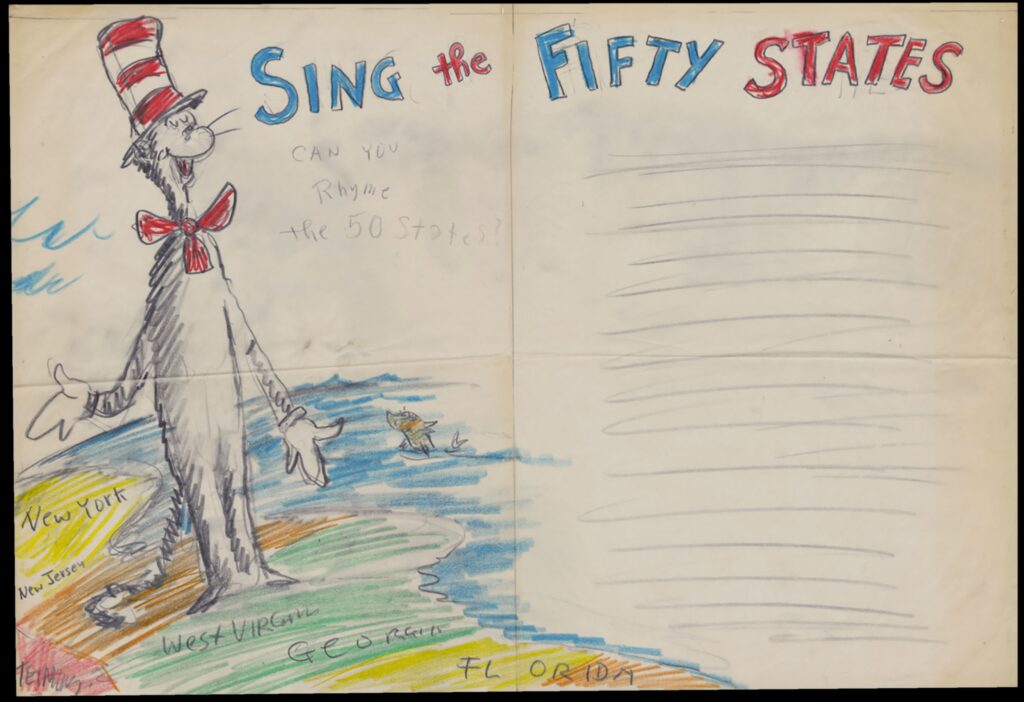
We are now approaching the 70th anniversary of The Cat in the Hat, and Dr. Seuss and his works remain not only invaluable teaching tools but buzzy cultural touchstones. Pop princess and Wicked star Ariana Grande is set to feature in a film version of Oh, the Places You’ll Go! The internet is agog about a newly discovered Seuss book called Sing the 50 United States! that will be released in June 2026 with a first printing of 500,000 copies. Search #Thneed and you’ll fall down the rabbit hole of thneed fashion, based on The Lorax, in which Truffula Trees are cut down willy-nilly to make a multipurpose item called a Thneed. These days, a Thneed is a garment that can be worn in multiple ways, like the Lululemon 2-in-1 maxi dress. For a deeper understanding, refer to TikTok’s “Thneed girl,” Rachel Leah (@rachleahx), who gained a following for videos calling out “blatant thneedery” in other users’ videos. Still, it’s hard for even the Lorax to compete with the Cat in the Hat, who remains the anchor and avatar of the Seuss legacy. The Cat, mischievous as ever, has been updated for today’s social landscape, as seen on the hilarious Dr. Seuss Instagram account. There, wearing wired headphones, he mugs and jams to the latest tunes, including Taylor Swift’s “The Life of a Showgirl.” He’s still a cool Cat, and when it comes to pop culture, he’s also the Goat.
Here is a selection of images from LIFE’s special tribute issue to Dr. Seuss.

TM & copyright © by Dr. Seuss Enterprises, L.P. 1957, copyright renewed 1985
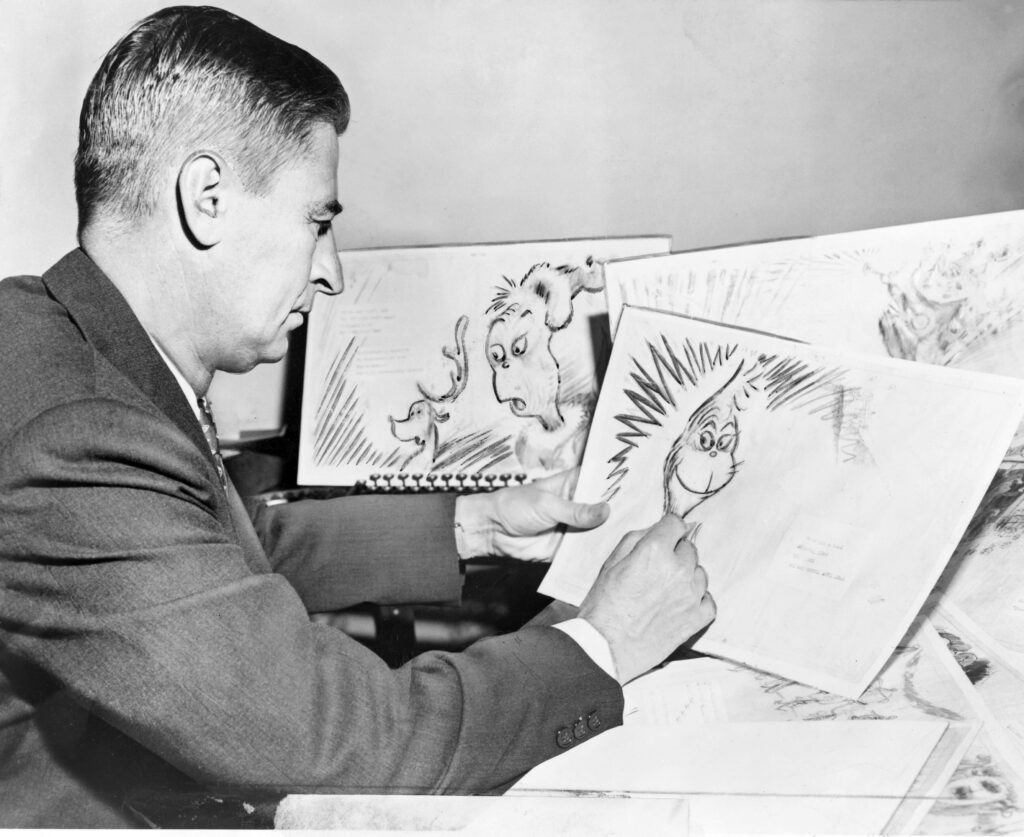
Theodor Seuss Geisel, a k a Dr. Seuss, changed the perception of children’s books through his beloved creations.
John Byrson/Getty Images

Theodor Seuss Geisel worked on a drawing of the grinch for his book “How The Grinch Stole Christmas,” which came out in 1957.
Universal Images Group via Getty Images
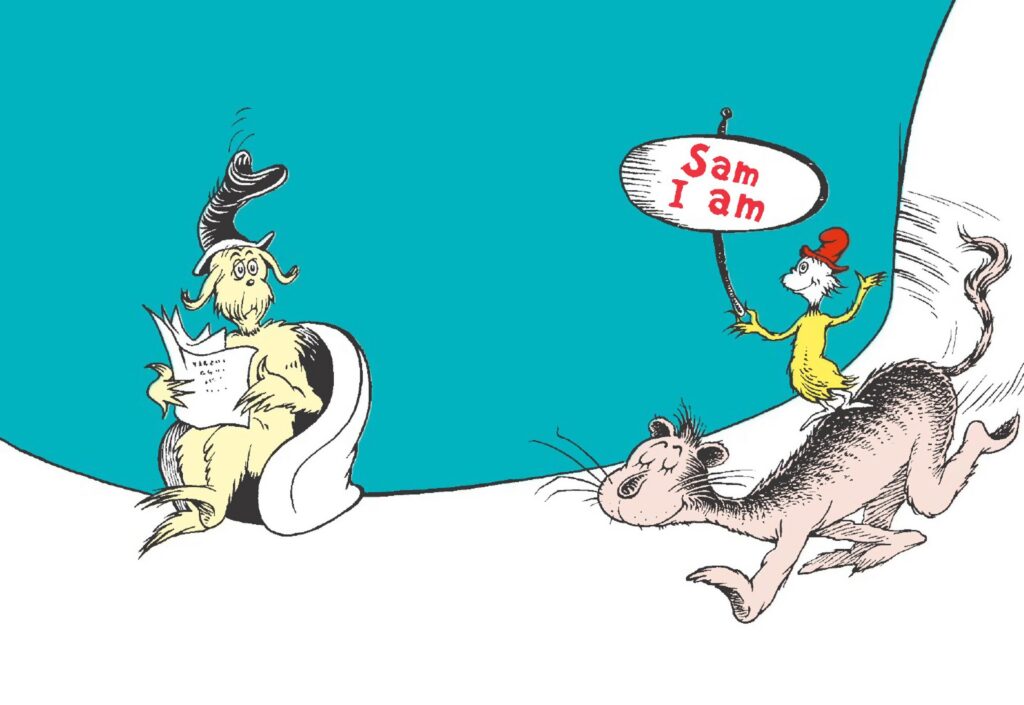
A scene from the beloved Dr. Seuss book “Green Eggs and Ham,” which came out in 1960.
TM & copyright © by Dr. Seuss Enterprises, L.P. 1960, copyright renewed 1988
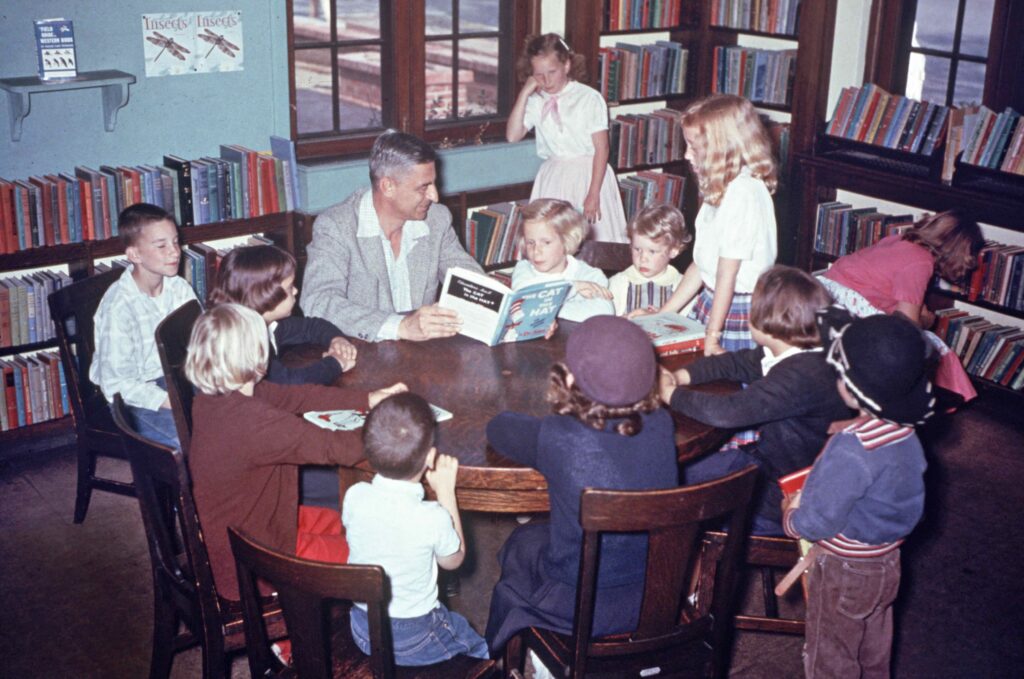
Theodor Seuss Geisel read from his book “The Cat in the Hat” at a public library in La Jolla, California, 1957.
Gene Lester/Getty Images
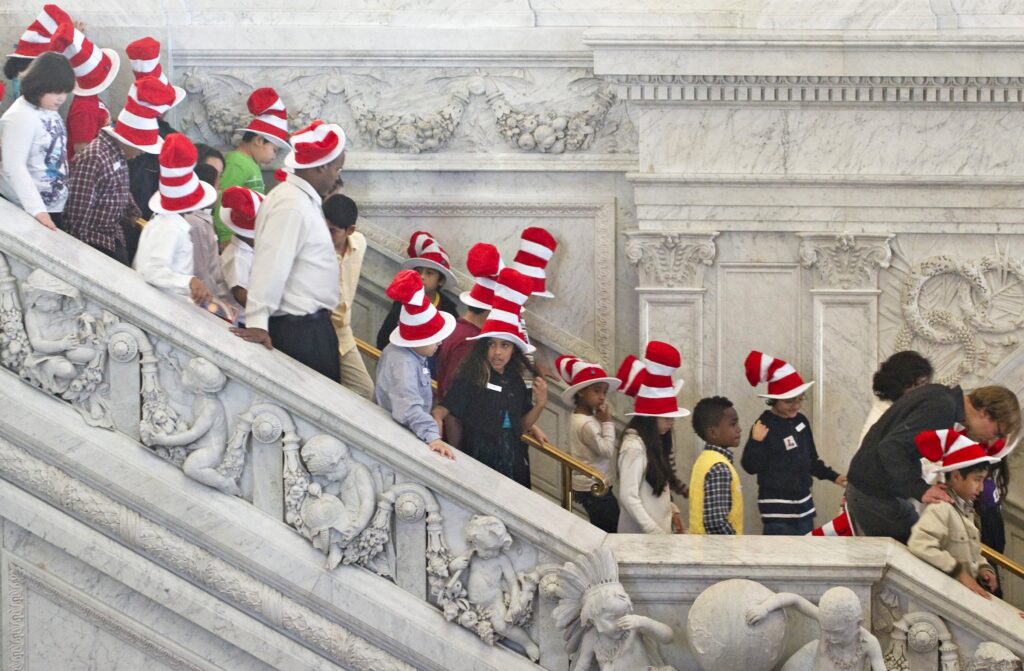
Students wore Dr. Seuss “Cat in the Hat” hats at a kickoff event for the National Education Association’s Read Across America Day at the Library of Congress in Washington, DC, March 2, 2011.
AFP via Getty Images
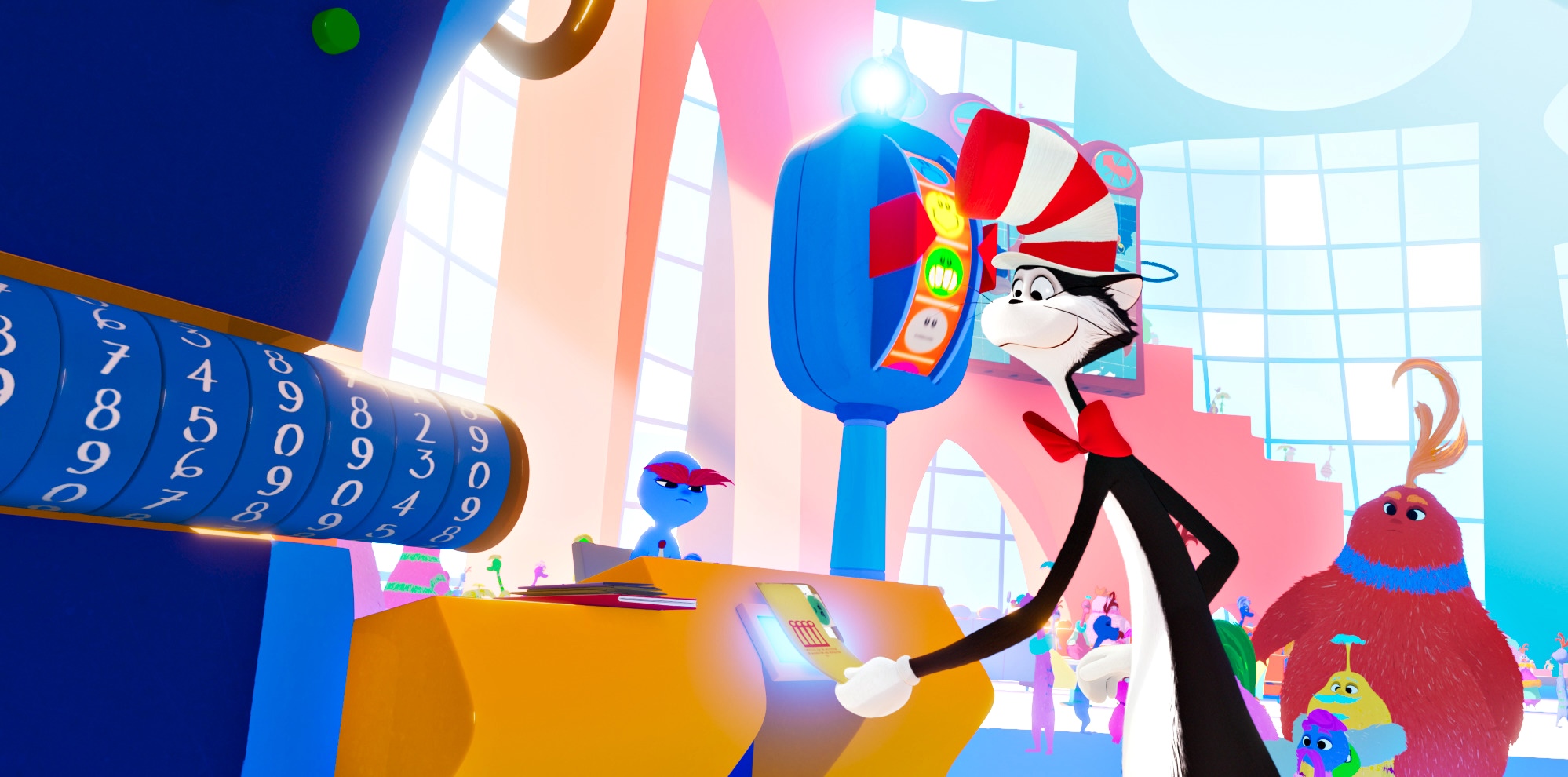
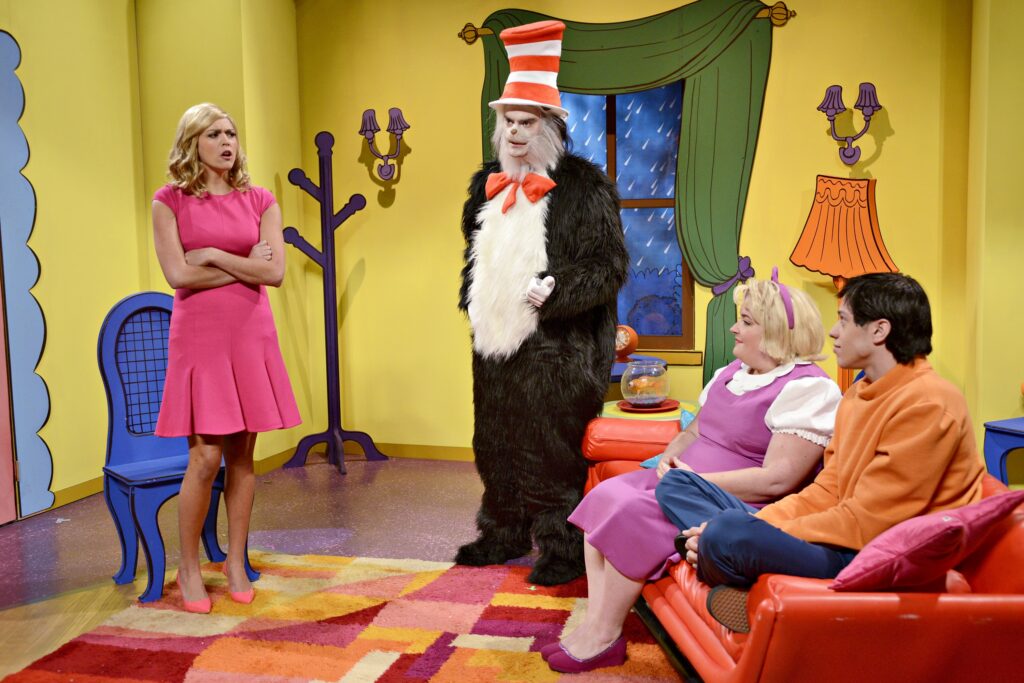
Twelve years before voicing the character in an animated movie, Bill Hader played the Cat in the Hat in a 2014 episode in Saturday Night Live.
NBCU Photo Bank/NBCUniversal via Getty Images
Bill Hader voices the title character in the 2026 movie The Cat in the Hat.
Courtesy Warner Bros. Pictures
A newly discovered Seuss book called “Sing the 50 United States!” that will be released in June 2026.
Dr. Seuss Enterprises