The World War II years were a tough time to be a young American man, with the draft carrying many of them away from home and into battle. In 1945, 12 million men served in the U.S. military.
That in turn posed a dilemma for many young women. Back then a woman’s average age of marriage was around 21 years old, so the absence of all those men was deeply felt.
An exception, though was Connecticut College, which back then was all-female The school’s campus in New London happened to be positioned near several military institutions.
Here’s how LIFE described the social life there in a story in its June 4, 1945 issue:
…At Connecticut College, girls have more boyfriends than in the palmy days when the college derived critical advantage from its strategic location between Harvard and Yale. In or near New London today are the Coast Guard Academy, a submarine base and two air bases, each one filled to overflowing with men. There are monthly dances sponsored by the Navy. There are frequent graduations at the Coast Guard Academy and accompanying activities. Along with the girls, the Academy attends Sunday services at the college chapel. There are picnics and baseball games.
The pictures by LIFE staff photographer Nina Leen show that the mingling between the two student bodies was wide and varied. One of Leen’s photos captured cadets chatting up female students who were bicycling by a bus stop.
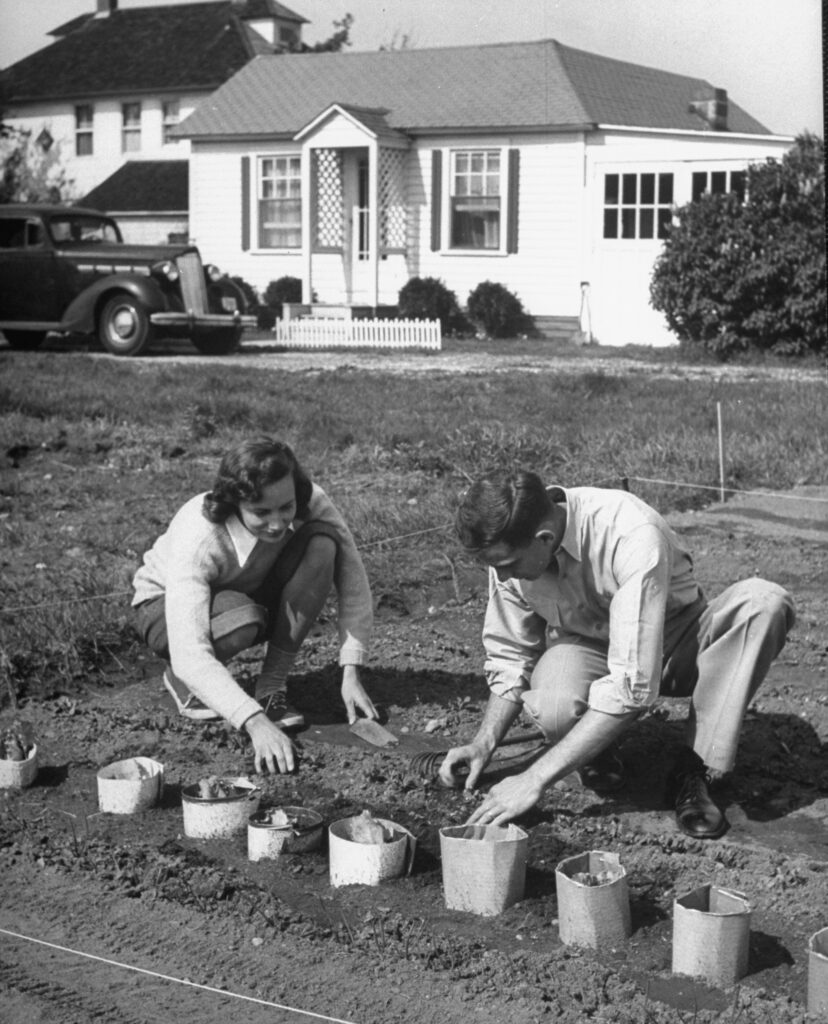
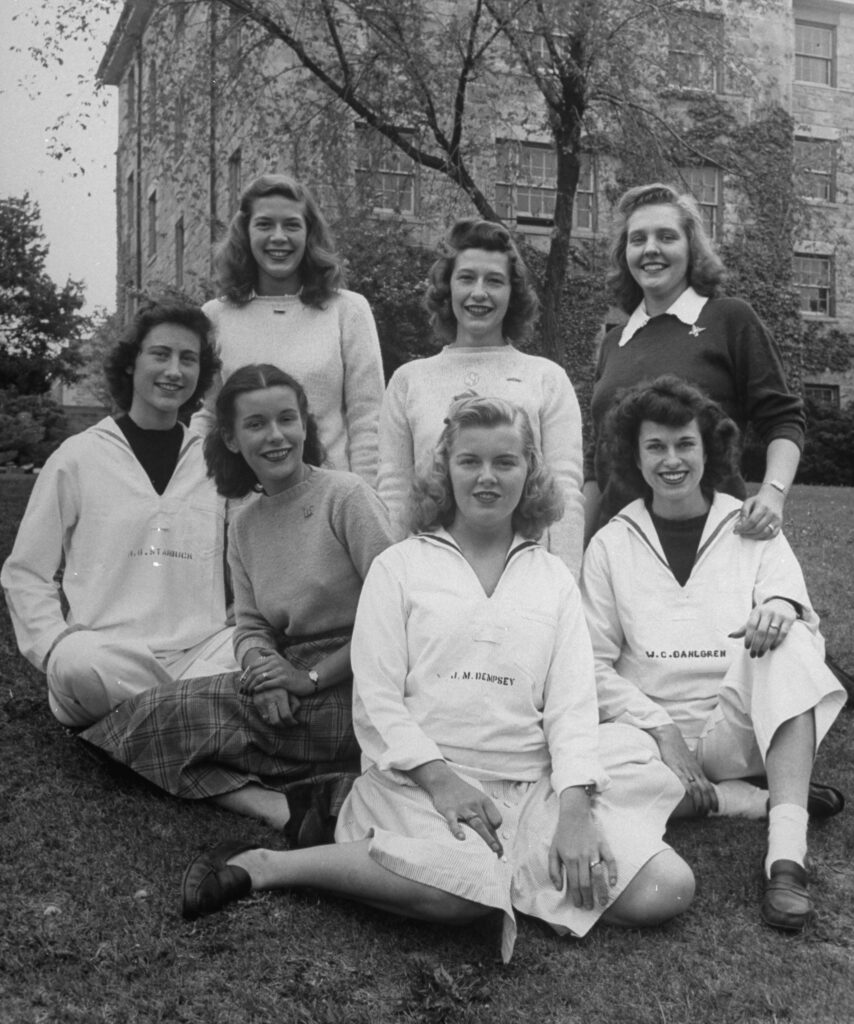
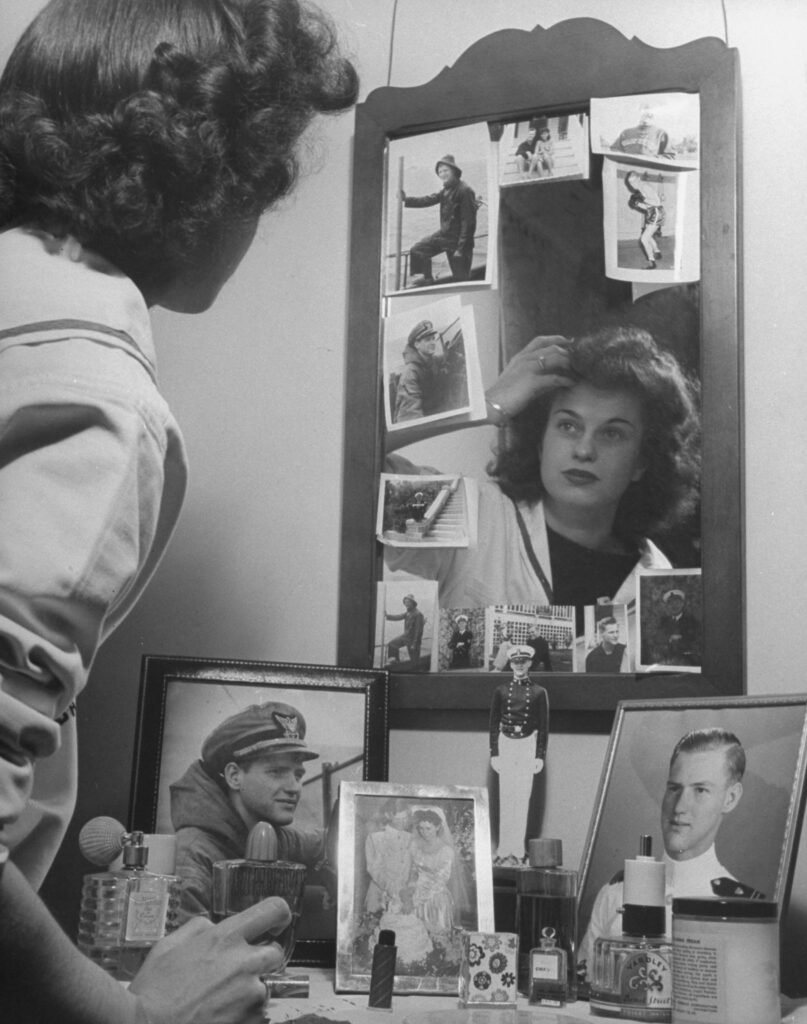
According to the story 25 Connecticut College students had been married while they were at school. Many Connecticut College women had studied up on military matters and politics so as to be better able to converse with the cadets. “But the rewards are great,” wrote LIFE. “On weekends there are always extra men and consequent fun for all the girls, that is, except for the married ones whose husbands have been transferred.”
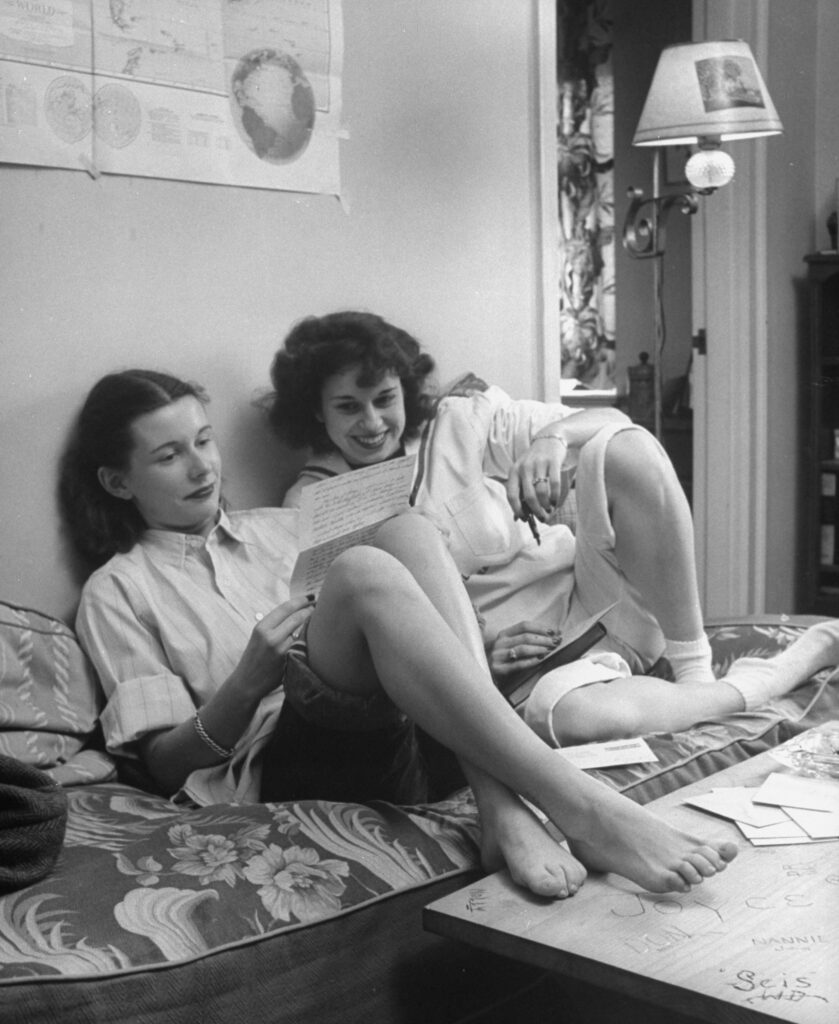
For those students, marriage meant awaiting letters and worrying whether their husbands would come home safe. It’s worth noting that the issue date in which this story ran is two days before D-Day, a major battle in which about 2,500 Americans were killed, and which also proved to be a turning point in the war.

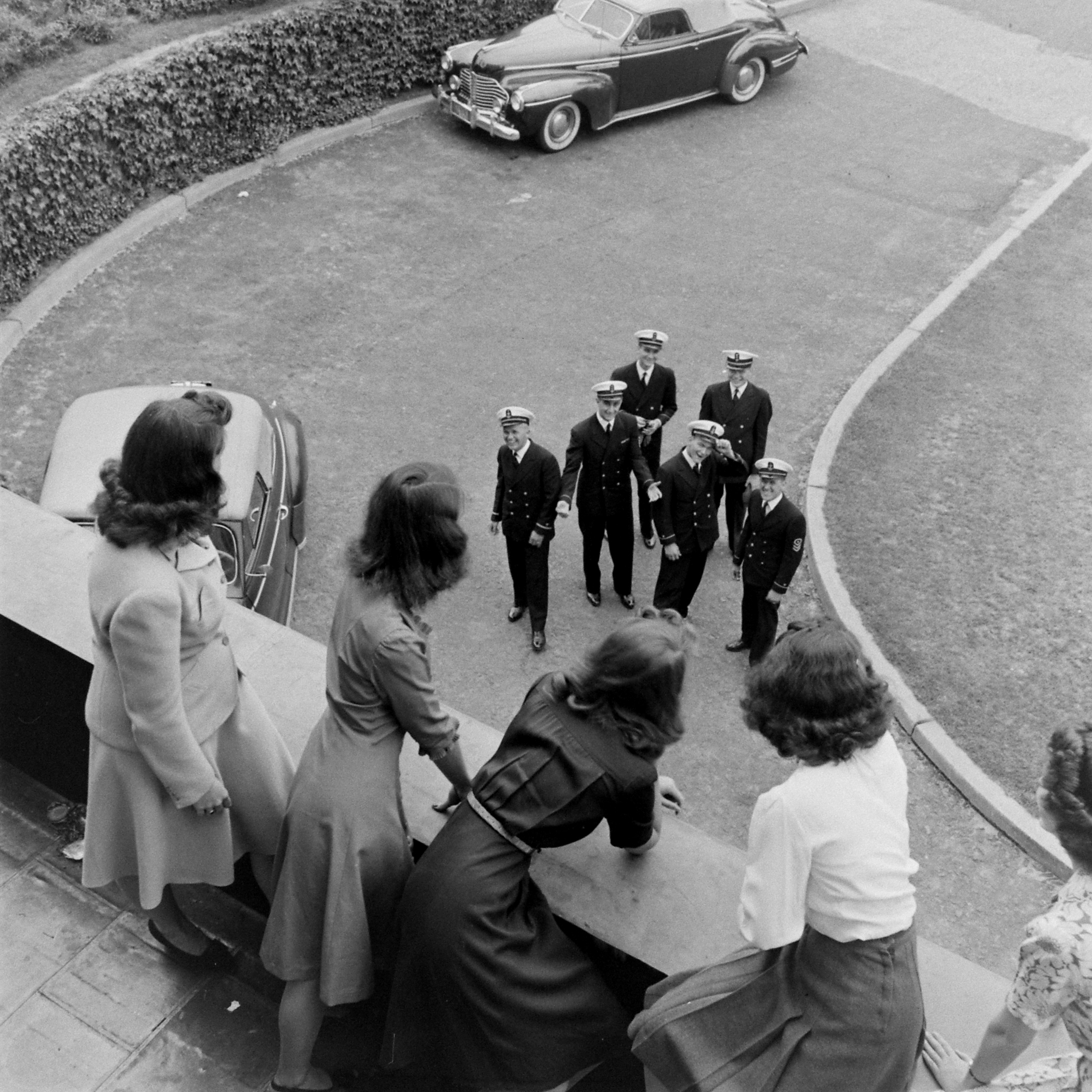
Coast Guard cadets came to pick up their dates at Connecticut College, 1945.
Nina Leen/Life Picture Collection/Shutterstock
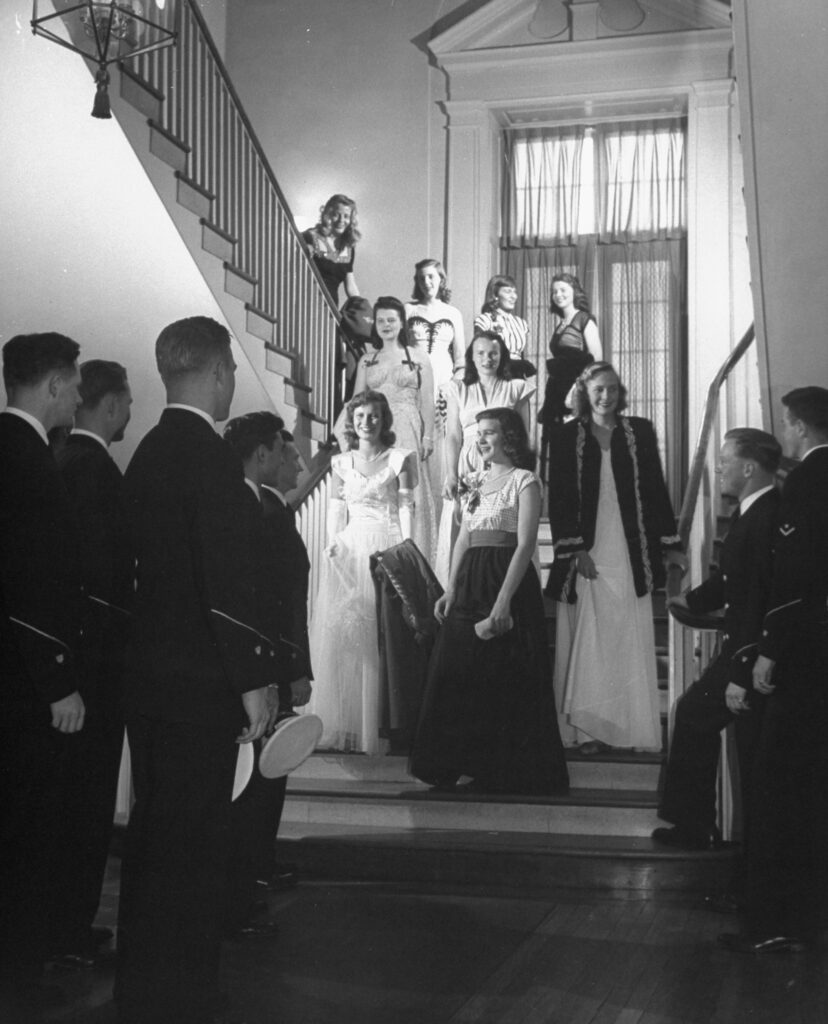
Girls entertained their boyfriends at Connecticut College, 1945.
Nina Leen/Life Picture Collection/Shutterstock
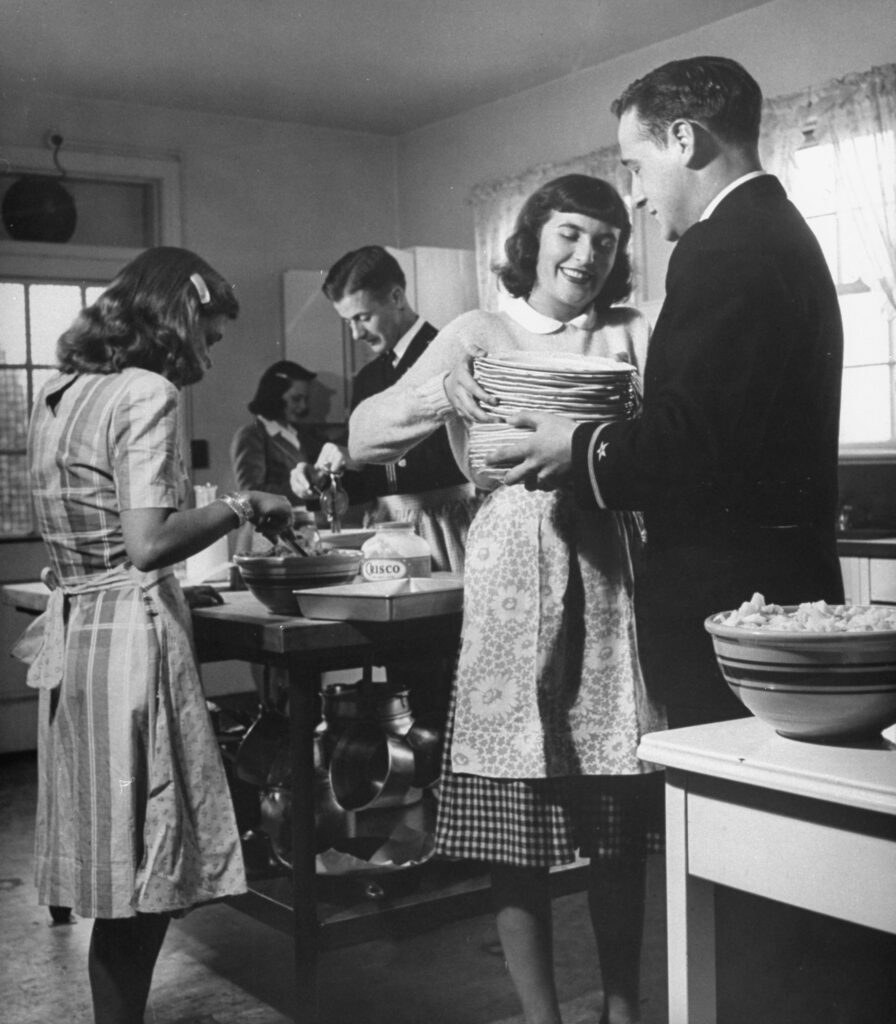
Students at Connecticut College, which was then an all-female institution, stopped to chat with Coast Guard cadets from the nearby base, 1945.
Nina Leen/Life Picture Collection/Shutterstock
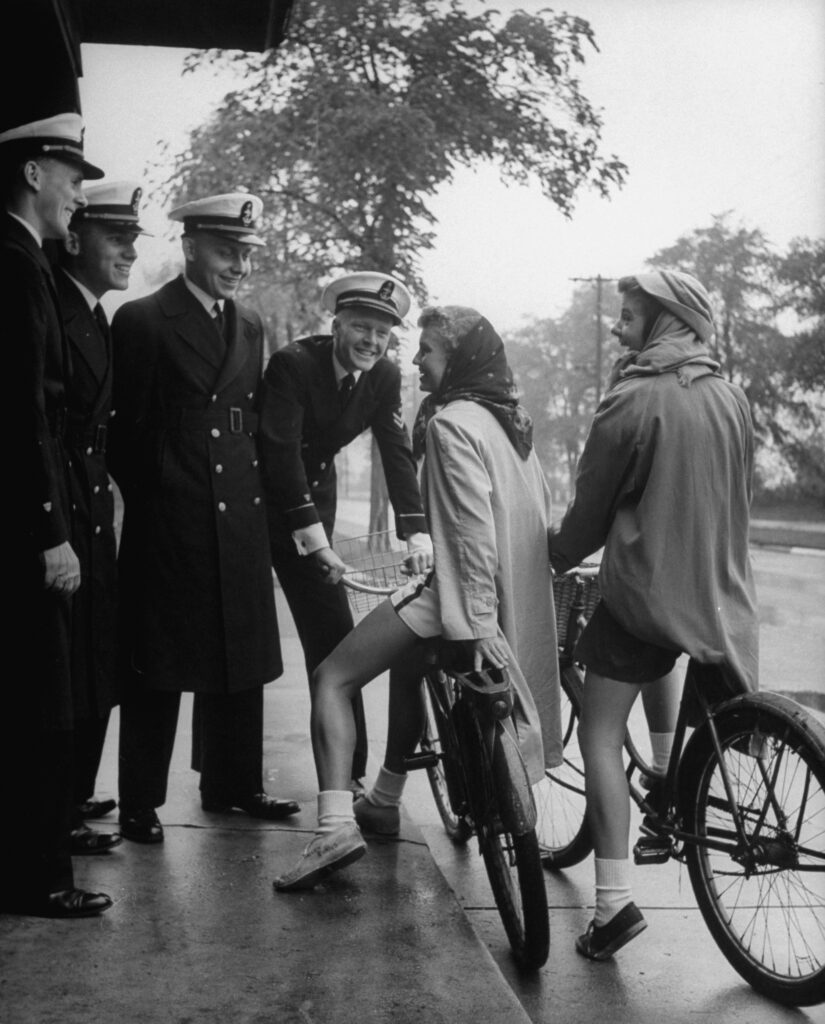
Students at Connecticut College, which was then an all-female institution, often socialized with cadets from the nearby Coast Guard base, 1945.
Nina Leen/Life Picture Collection/Shutterstock
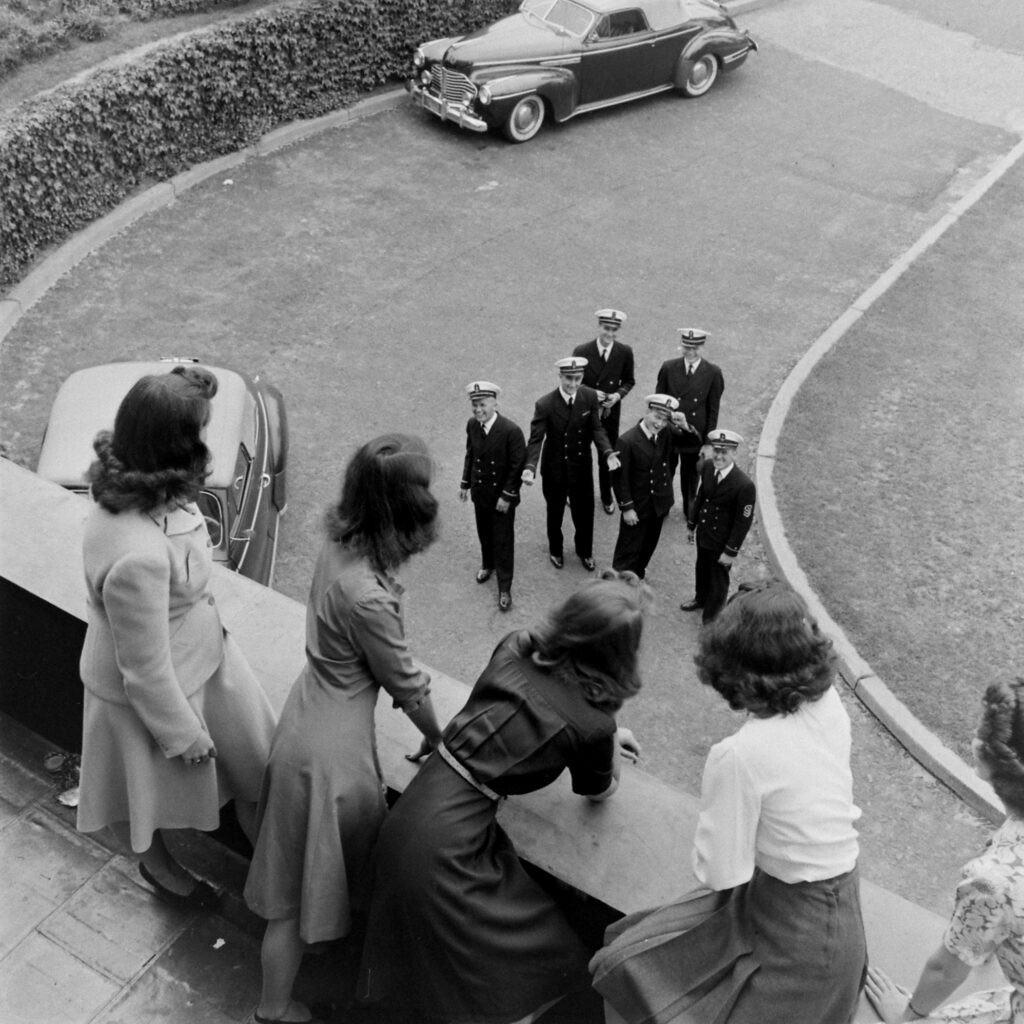
Students at Connecticut College, which was then an all-female institution, often socialized with cadets from the nearby Coast Guard base, 1945.
Nina Leen/Life Picture Collection/Shutterstock
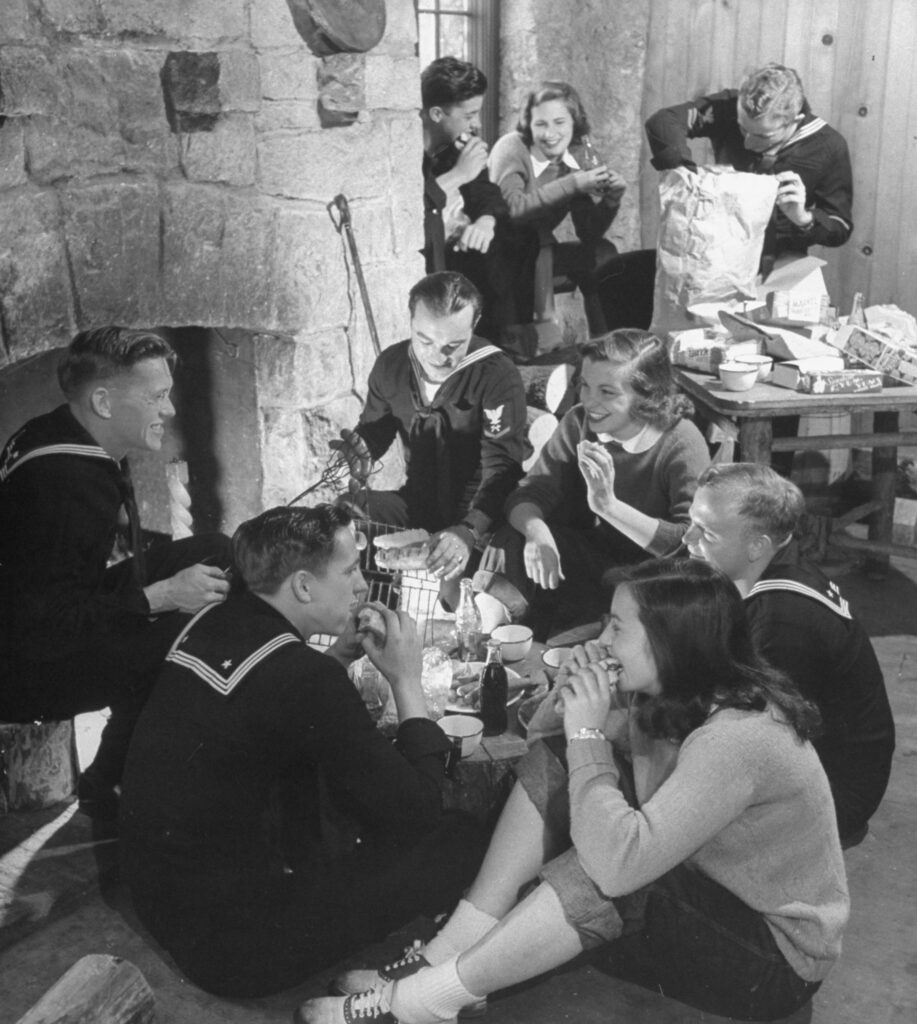
A Connecticut College student was helped with her chemistry homework by a Coast Guard cadet, 1945.
Nina Leen/Life Picture Collection/Shutterstock
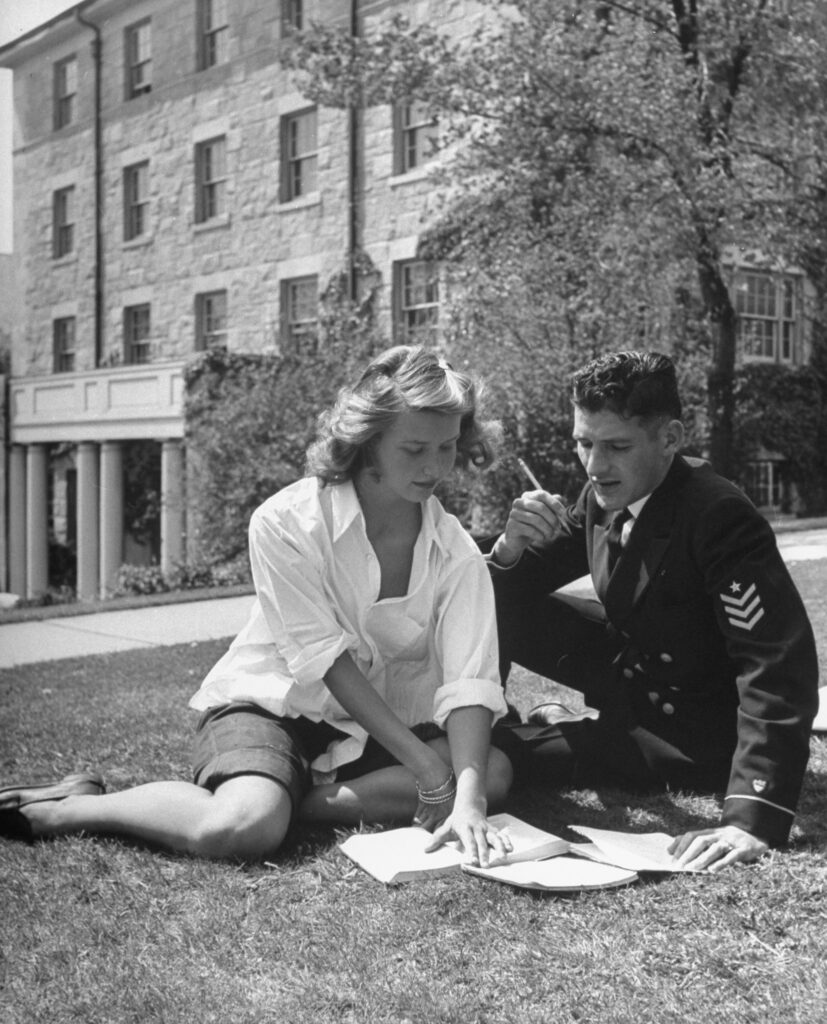
A Connecticut College student and her husband had a home near campus, 1945.
Nina Leen/Life Picture Collection/Shutterstock
Married Connecticut College students, some of them wearing their husbands’ Coast Guard gear, 1945.
Nina Leen/Life Picture Collection/Shutterstock
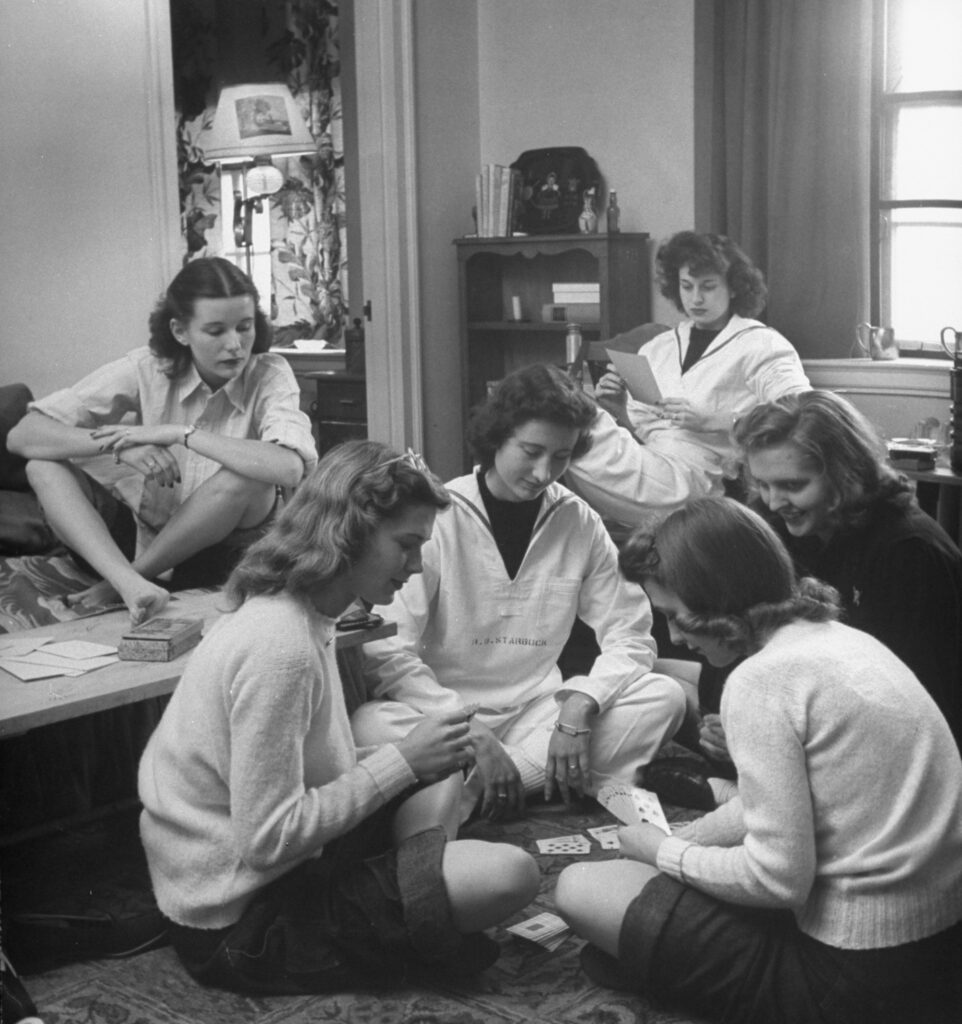
Students at Connecticut College, which was then an all-female institution, played cards, 1945.
Nina Leen/Life Picture Collection/Shutterstock
A Connecticut College student’s mirror was adorned with photos of her husband, a serviceman she met while at school, 1945.
Nina Leen/Life Picture Collection/Shutterstock
Two married Connecticut College girls read letters from their husbands who were serving in the military, 1945.
Nina Leen/Life Picture Collection/Shutterstock